

Euro breakup should be orderly - Dunedin CEO


The ongoing eurozone crisis is a concern on the mind of many PE players, potentially threatening access to financing and the growth prospects of portfolio companies. But, in what could prove to be a controversial view, Dunedin CEO Ross Marshall foresees that it could also spell trouble for euro-denominated funds. Greg Gille reports
More on Funds

Stonehage Fleming raises USD 130m for largest fund to date, eyes 2024 programme
Multi-family office has seen strong appetite, with investor base growing since 2016 to more than 90 family offices, Meiping Yap told Unquote

Redalpine expands leadership team amid CHF 1bn-plus fundraise
Ex-Rocket Internet leader Bettina Curtze joins Swiss VC firm as partner and CFO

Change Ventures aims to hold final close for EUR 20m third fund by mid-2024
Estonia-registered VC could bolster LP base with fresh capital from funds-of-funds or pension funds

Iron Wolf Capital targets EUR 70m for second vehicle
Baltic investor anticipates early 2024 launch and will focus on early-stage AI and deeptech startups
Latest News

Stonehage Fleming raises USD 130m for largest fund to date, eyes 2024 programme
Multi-family office has seen strong appetite, with investor base growing since 2016 to more than 90 family offices, Meiping Yap told Unquote

Permira to take Ergomed private for GBP 703m
Sponsor deploys Permira VIII to ride new wave of take-privates; Blackstone commits GBP 200m in financing for UK-based CRO

Partners Group to release IMs for Civica sale in mid-September
Sponsor acquired the public software group in July 2017 via the same-year vintage Partners Group Global Value 2017
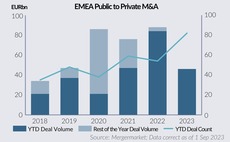
Change of mind: Sponsors take to de-listing their own assets
EQT and Cinven seen as bellweather for funds to reassess options for listed assets trading underwater