

German election: PE assesses likely coalitions
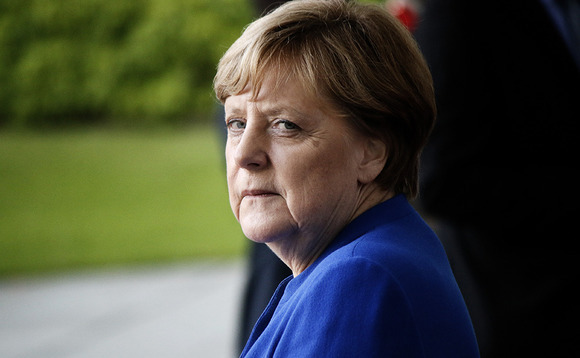

This weekend Germany will hold a federal election to select representatives for its 19th parliament since the second world war. Oscar Geen speaks to market participants about its potential impact on private equity and the government's role in supporting business and innovation
Germany will go to the polls on Sunday to determine which parties have a mandate to form its next government. From a private equity perspective, the differences between the main parties are subtle but significant.
Hubertus Leonhardt, partner at Tübingen-based lower-mid-cap buyout and growth investor SHS Gesellschaft für Beteiligungsmanagement, takes a close interest in the positions of the main political parties towards private equity: "The Christian Democratic Union (CDU) and Social Democratic Party (SPD) are convinced that innovation is an important basis for sustainable economic growth," he says. "Nevertheless, both parties are also heavy regulators. The Free Democratic Party (FDP) traditionally focuses on private investment and deregulation while the Greens still follow their regulatory tradition."
Angela Merkel will almost certainly retain the chancellorship if polls of voting intention are correct. At the time of publication, her party, the CDU, is the clear front runner at 36%, ahead of the SPD on 22% according to Wahlrecht.de's poll of polls.
The question is which party or parties the CDU will form a coalition government with. The current government is a so-called "grand coalition" between the centre right CDU and centre left SPD, which is perhaps the most likely outcome. However the CDU's preferred coalition partner is the more economically liberal Free Democratic Party (FDP), with which it formed a government in 2009. Yet, if the FDP fails to gain enough votes to form a majority as in 2013, the Greens could join the government to form a so called "Jamaica coalition" of black, yellow and green parties.
A coalition between the CDU and the FDP would be more supportive of private equity by nature, but all the main parties have a sufficient sense of responsibility that means they don't want to do anything to undermine economic strength" – Emanuel Strehle, Hengeler Mueller
In these options, Emanuel Strehle, partner specialising in private equity transactions at Hengeler Mueller, sees little variation. "Deviations between the main parties appear to be very small and hard to find. A coalition between the CDU and the FDP would be more supportive of private equity by nature, but all the main parties have a sufficient sense of responsibility that means they don't want to do anything to undermine economic strength."
Michael Brandkamp of early-stage, partially government-funded, investor High-Tech Gründerfonds (HTGF) agrees with this sentiment: "We do not anticipate any big changes or impact for the VC market on 24 September. All of the main parties recognise the importance of innovation – in different ways, of course – but they all recognise the importance of startups and funding startups."
To an outsider, this kind of politics could be seen as boring or lacking passion. However, Strehle is clear that it is a strength: "The key point is that private equity doesn't like uncertainty, and in Germany, stability of the regulatory and legislative agenda is a key feature of the last 20 years since private equity came to Germany in the mid-90s."
This is highlighted by the fact that the most important recent government intervention in private equity was a minor amendment to the foreign trade and payments ordinance. Says Hengeler Mueller's Strehle: "The biggest changes were slightly broader in scope, giving the Federal Ministry for Economic Affairs and Energy more time and rights to review transactions in certain industries. This is, in comparison with other countries, still a reasonable and rather soft approach."
HTGF's Brandkamp agrees and does not believe it will pose a problem for VC: "Germany is an open economy and we believe in global markets and the global economy. The numbers of deals being rejected using the foreign trade and payments ordinance will be very limited. We don't expect problems with selling our startups on the global level."
On the wish-list
However, Leonhardt highlights some areas in which he would like the government to do more for private equity. The first is investment in innovation: "Everyone agrees that digitisation processes should be enhanced and improved – but there still is a lot to do. We would like to see a higher proportion of GDP going into innovation. We are at a disadvantage in this respect compared with the US, for example."
Leonhardt identifies the conservatism of regulators with regard to large institutional investors as a stumbling block. "In Germany, pension schemes and insurance are heavily regulated, and it is rather difficult for them to invest significant assets in PE and VC," he says. "Because the large political parties want to maintain an extremely high level of security, the situation is unlikely to change."
Brandkamp is more positive on the current and future level of state support: "The government plays an important role in supporting innovation in Germany and there are more schemes on the way. For example, KfW will have a new subsidiary to support fund-of-funds activities, which can combine with the European Investment Fund's fund-of-funds and generally improve the fundraising environment for venture capital."
Most would agree that the policies of the right wing Alternative for Germany (AfD) would pose a threat to financial and political stability, although they only have an outside chance of gaining a substantial vote-share. Brandkamp does not expect the AfD to get more than 10%, but warns: "If the AfD get 15-20%, then we would be in trouble. Every point they gain is a point too many, because their outlook is not useful for Germany, so in that case we would be negatively affected along with the rest of the German economy."
Leonhardt is less worried about this outside possibility but sees even their presence in the parliament as a potential embarrassment. "No one expects the AfD being part of a government after the elections. However, it is important for an export-orientated and globally embedded country to be perceived as open-minded – what the AfD seems not to be at all. Therefore, the more seats they win in the Bundestag, the worse it could turn out for Germany as an international brand."
More on DACH

Dataciders sponsor Auctus mulls sale via Houlihan Lokey
German GP first acquired the local IT services group in May 2019 via Auctus V, a 2019-vintage
Bregal eyes local deal origination with new Swiss office
GP's third fund is completing its investment period, with fourth fund registered

Newly launched Utopia Capital aims to deploy EUR 10m-plus by 2028
Angel investor Christian Schroeder's new investment vehicle will support early-stage tech companies addressing humanitarian issues
Germany's DFL to collect NBOs for EUR 3bn media rights stake
Large-cap sponsors including Advent, Blackstone, Bridgepoint, CVC, EQT and KKR expected to bid today
Latest News

Stonehage Fleming raises USD 130m for largest fund to date, eyes 2024 programme
Sponsor acquired the public software group in July 2017 via the same-year vintage Partners Group Global Value 2017
Stonehage Fleming raises USD 130m for largest fund to date, eyes 2024 programme
Czech Republic-headquartered family office is targeting DACH and CEE region deals
Stonehage Fleming raises USD 130m for largest fund to date, eyes 2024 programme
Ex-Rocket Internet leader Bettina Curtze joins Swiss VC firm as partner and CFO
Stonehage Fleming raises USD 130m for largest fund to date, eyes 2024 programme
Estonia-registered VC could bolster LP base with fresh capital from funds-of-funds or pension funds