

GP Profile: Crédit Mutuel Equity
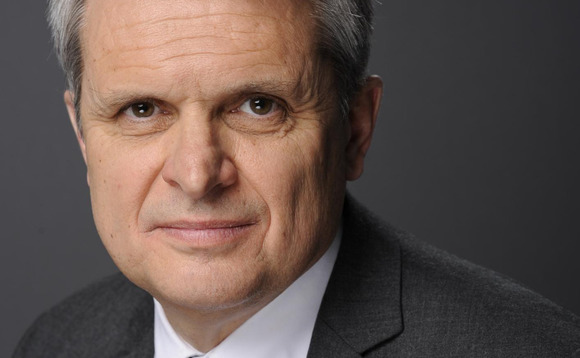

CME board member Christophe Tournier talks through the firm's minority focus with Francesca Veronesi, and its push for third-party capital via the upcoming launch of an infra strategy
Previously known as CM-CIC Investissement, Crédit Mutuel Equity (CME) invested a total of €422m across 87 companies in 2019. To cap off what was a busy year, it also rebranded, in line with other subsidiaries of the wider Crédit Mutuel group.
First established as the private equity branch of CIC and later Crédit Mutuel in 1996, CME has now reached €3bn in assets under management (AUM). With seven offices in France, it also has a presence in Germany, Switzerland, Canada and the US. It conducts three main investment strategies: growth capital is the main focus (€1.8bn AUM), followed by buyouts (€600m) and venture transactions (€150m). Via both growth and buyout deals, CME provides equity tickets in the €5-150m range. The GP historically specialised in acquiring minority stakes, which still represent 85% of CME's buyout transactions. Says Christophe Tournier, a board member at CME: "We created a buyout team 10 years ago, but the origins of the group and our core activity still remains growth. We find that growth investments and minority buyouts simply give us a great amount of flexibility, allowing us to switch from a minority to a majority shareholding in the same company if it makes sense."
Bolt-ons are a big part of CME's strategy. Of the €1.5bn invested by the firm in the 2017-2019 period, 40% represented reinvestments in businesses, mostly via bolt-ons. The firm is sector-agnostic and some of its investments completed in 2019 include the backing of Feedaxess, a kitchens and refrigerators manufacturer and distributor; Systosolar, a photovoltaic equipment specialist; and Hardis Group, a consulting, digital services and software publishing company.
Overall, during the past three years, the firm generated an average IRR in excess of 15% on its exits, for an average holding period of between eight and 10 years.
In a market with an exacerbated level of competition, it's good to put your money to work in companies you already know" – Christophe Tournier, Crédit Mutuel Equity
Infra push
On top of its recent rebranding effort, the firm is set to launch its infrastructure activity, to be funded via third-party money. "The launch of infra activities reflects the need to diversify our strategy. Having conducted a number of long-term transactions, we believe CME is well placed to take on this activity," says Tournier. He adds that there are a number of opportunities in France in this space, in particular, in renewable energy, storage, new mobility, smart cities and social infrastructure. Tournier adds that CME was looking to diversify its activities to become more resilient as a business, and is expecting the infra activity to generate returns just below 10% on average.
The firm opted to start talks with LPs for the new infra branch in order to quickly launch the new activity. However, for its well-established private equity activities, it intends to continue drawing equity via its balance sheet. Tournier explains that this arrangement gives the firm freedom to decide the length of the investment period, avoiding the time constraints of closed-ended vehicles. The average investment period for the firm overall is around seven or eight years, though a fifth of its investments have lasted more than 10 years.
The GP is deeply rooted in its market of origin: 90% of CME's current portfolio companies are based in France. Tournier underlines that raising money today is relatively easy for French GPs, but what he considers real wealth is the type of network built within the industrial community over the decades, as well as a very strong portfolio: "In a market with an exacerbated level of competition, it's good to put your money to work in companies you already know." In a number of cases, CME has reinvested through buyouts in businesses it previously backed via growth investments.
Dry powder and available debt are almost too abundant in the current market, Tournier says, meaning that finding high-quality assets without overpaying is a real challenge. "The terms of a number of auctions have been renegotiated this year because bidders realised that metrics had been exaggerated during the auction processes. A number of GPs faced the issue in France, particularly with buyouts, in the past 12 months. It is symptomatic of a discrepancy between expectations of vendors and sellers."
Finally, Tournier expresses concerns around equity-to-debt ratios seen in the current market, with some mid-market companies being sold at 12-13x EBITDA, with debt amounting to 6x. Bullet repayments are frequently arranged as well. He questions whether such conditions will be sustainable in the long-run: "Although raising capital and obtaining financing is quite easy, under the surface we are actually experiencing a challenging environment. GPs really need to think long-term and expect exits to take place in not such a favourable environment."
More on GPs

IPO offers CVC chance to become multi-asset consolidator
Potential IPO also offers monetisation solution for founders and GP stakes investor Blue Owl

VC Profile: Possible Ventures lines up frontier tech deals halfway through fresh EUR 60m fundraise
Germany-based pre-seed investor is set to hold a first close for its third fund in mid-September

GP Profile: Apheon builds on family roots, mulls exits and reinvestment opportunities
Belgian GP, formerly known as Ergon, to continue to target family- and entrepreneur-owned European businesses

Kudu to step up boutique GP stake deals in Europe
MassMutual-backed investor aims to add more infrastructure and specialised equity GPs to its portfolio
Latest News

Stonehage Fleming raises USD 130m for largest fund to date, eyes 2024 programme
Sponsor acquired the public software group in July 2017 via the same-year vintage Partners Group Global Value 2017

Stonehage Fleming raises USD 130m for largest fund to date, eyes 2024 programme
Czech Republic-headquartered family office is targeting DACH and CEE region deals
Stonehage Fleming raises USD 130m for largest fund to date, eyes 2024 programme
Ex-Rocket Internet leader Bettina Curtze joins Swiss VC firm as partner and CFO
Stonehage Fleming raises USD 130m for largest fund to date, eyes 2024 programme
Estonia-registered VC could bolster LP base with fresh capital from funds-of-funds or pension funds