

Q&A: Italian private equity renaissance?
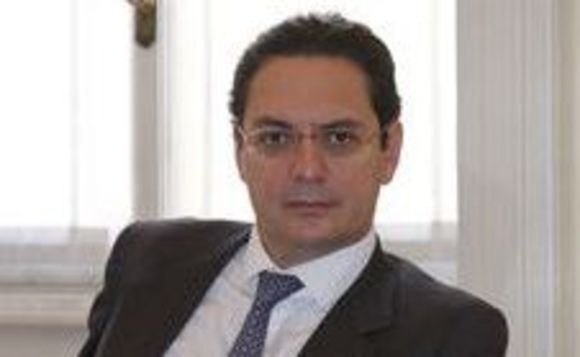
From 2003 to 2008, Italian private equity activity grew continuously. However, since 2009 this has no longer been the case. Francinia Protti-Alvarez speaks to Raffaele de Courten, founding partner at AltoPartners, about the state of affairs and the trends that are expected to develop.
1. How has the Italian market evolved over the past couple of years?
The global crisis has had its effects on the Italian private equity market and the number of investments completed in the last 18 months has fallen significantly after three years of unprecedented activity; in particular regarding large buyout deals. For several players, the priority has been handling critical portfolios.
The mid-market buyout segment has been affected to a lesser degree owing to lower average entry prices and leverage ratios. Furthermore, financing from local banks is still available for mid-sized companies with sound fundamentals and with an important local presence. The Italian market has also registered an increase in the number of minority expansion investments. Entrepreneurs seem to have warmed up to private equity and now see in them the means to strengthen their balance sheet or to pursue an external growth strategy.
2. Where do most opportunities lie?
Interestingly enough, we do not see significant opportunities triggered by a decrease in entry multiples. Sector wise, dealflow for buyout and expansion deals keeps being concentrated in defensive businesses, which have suffered less in terms of sales and margins, such as food, chemical-pharmaceutical, healthcare and services
Competitive deal flow stemming from advisers remains limited. Rather, opportunities might arise through proprietary dealflow whenever the valuation gap can be bridged through a deep knowledge of the company, a close monitoring of its ongoing performance and, above all, the possibility to implement a long-term growth project by a new management team.
3. How has portfolio management evolved?
In the current market environment, companies will need specific sector know-how and financial support, across the board; this is, and will likely be, the case for a number of years to come. When buying from families, a new, carefully selected management team should be brought on board. Equally, the investor's contact network will be tapped to contribute to the added value, from manufacturing, to sales and marketing, to finance.
Since returns will reasonably stem from the balanced growth of the companies, which is likely to take a medium to long period to time, private equity funds will have to adopt an industrial approach in managing the portfolio. GPs are expected to have frequent and significant interactions with the managers of their portfolio companies, to discuss the overall strategy, and day-to-day issues as required.
4. What is the outlook for the Italian industry; what are the challenges ahead and how are they likely to be overcome?
The crisis has contributed to stress in some intrinsic features of the industry and, therefore, has emphasized the differences between diverse business models within private equity. Recent market evidence in Italy has led us to the following considerations: (i) a greater number of deals is expected to involve small and medium-sized businesses in the northern regions, thus reflecting the structure of the Italian economy; (ii) acquisition debt from banks will be less easily available than in the past, and the overall quality of the GP as the new company shareholder will make a difference; (iii) funds with a strong sector knowledge and network will be privileged and potentially more successful; (iv) proprietary sourcing will be key in lowering entry multiples and negotiating deals with time enough to have a satisfactory understanding of the company and its business model; (v) a database of competent and motivated managers available for MBIs in various sectors will be crucial, ultimately, such people will be the driver of the success or failure of each investment story.
The full interview can be read in the June issue of Southern Europe unquote".
Latest News
Stonehage Fleming raises USD 130m for largest fund to date, eyes 2024 programme
Sponsor acquired the public software group in July 2017 via the same-year vintage Partners Group Global Value 2017

Stonehage Fleming raises USD 130m for largest fund to date, eyes 2024 programme
Czech Republic-headquartered family office is targeting DACH and CEE region deals

Stonehage Fleming raises USD 130m for largest fund to date, eyes 2024 programme
Ex-Rocket Internet leader Bettina Curtze joins Swiss VC firm as partner and CFO

Stonehage Fleming raises USD 130m for largest fund to date, eyes 2024 programme
Estonia-registered VC could bolster LP base with fresh capital from funds-of-funds or pension funds