

Food for thought: how PE can build a sustainable supply chain
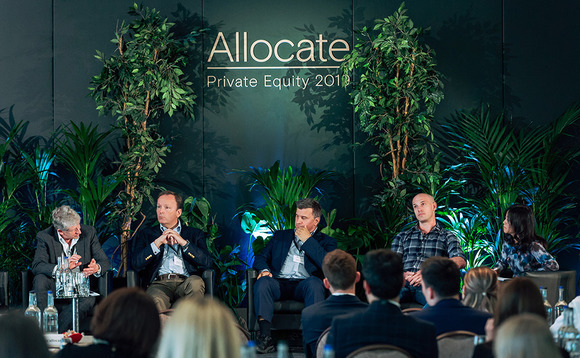
Food production was one of the longer-term investment trends discussed during the Allocate event in June. A panel of sector experts chaired by Unquote's Denise Ko Genovese shared their insights on the topic
Speakers on the food production panel at June's Allocate 2019 conference included former Yo! Sushi CEO and current Trispan operating partner Robin Rowland; Alastair Cooper, a mixed organic farmer and senior investment director in ADM Capital's Cibus Fund; Spyro Korsanos, a partner at corporate finance house GV Partners; and collaborative system Foodchain's CEO, Richard Murray.
Panellists agreed that creating a sustainable supply chain was one of the biggest problems in the food industry. They urged investors in related businesses to engage with the issues not just to alleviate the burden on resources and reduce waste, but also in order to stay relevant and future-proof their companies.
"Customers and team members increasingly want to know where supplies are coming from," said Robin Rowland. "Sustainability is part of staying relevant, as it has become important to the consumer." Guests and team members care passionately about waste, food miles, healthy options and ways of working, all of which are tied into the sustainability debate led by the Sustainable Restaurant Association, he added.
Small is beautiful
Richard Murray, the co-founder of Foodchain, said that one of the problems was that the food chain had been industrialised. "We have removed the infrastructure for smaller suppliers. This has left only a few retailers and distributors able to mould the supply chain to their needs," he said, citing that 85% of cattle is slaughtered by just five out of about 130 abattoirs in the UK, resulting in a monopoly with only a few dictating what the market should look like.
Murray's Foodchain initiative has built up a community of chefs, restaurants, producers and suppliers to form a collaborative network. The aim is to build sustainable relationships between sellers and buyers to shorten, improve and give transparency in the food chain. "Transparency is key for small and medium-sized producers," he said. "We want to work towards everyone being connected. Currently it isn't a level playing field because a free range egg from a shed of 50,000 hens and a free range eggs from a shed of 2,000 hens is labelled as the same thing."
And as to whether sourcing locally to increase traceability and transparency is possible on a larger scale, for the likes of a national restaurant chain for example, Murray said that people focus too much on scaling the production when they need to focus on scaling the network. Scaling the network of small and medium-sized suppliers takes away barriers to entry, getting the same amount of market access as a big supermarket.
In America, the average bag of salad is driven over 200 miles from farm to table, but a vertical farm can bring production much closer to the consumer, lowering transport time, cost and waste" – Alastair Cooper, ADM Capital
Rowland agreed that traceability of suppliers is becoming more important to the consumer and though it is difficult for companies such as Yo! Sushi to source locally, some chains such as UK brewery and pub operator Marston's do buy locally and are looking for better working relationships with their suppliers despite some monopolies still being in the way.
Tech solutions
Former banker turned mixed organic farmer and agri-tech investor Alastair Cooper said that investment in agricultural technology could go a long way to resolving many of the issues in the food industry. "Growing urbanisation has led to changes in dietary requirements, such as more demand for protein-dense foods, which are much more draining on the world's resources to produce," he said, adding that new technology can help create more sustainable farming systems.
One example Cooper cited was ADM Capital leading a $40m series-D fundraise for AeroFarms, an indoor growing system that enables production without sun or soil, using 95% less water and 80% less nutrients than in the field. Each farm has the ability to produce 300 times the amount grown in a field, with one two-acre vertical farm operating just outside New York City.
"In America, the average bag of salad is driven over 200 miles from farm to table, but a vertical farm can bring production much closer to the consumer, lowering transport time, cost and waste," he said.
Other examples include a recent investment in food processing platform MycoTechnology, which uses fungi to transform agricultural waste into high-value, complete protein alternatives to animal-based products; and industrial-scale nano-bubble generator Moleaer, which enables water to be super saturated with any gas such as oxygen, helping farmers to grow more crops with less resource.
Spyro Korsanos of Global Venture Partners, who also advises Delivery Hero, explained how technology is not only changing the way in which food is made but also the way in which people consume it, with an increasing number of investments made in delivery platforms and virtual restaurant concepts in recent years.
"Historically, the place to get a freshly prepared meal was in a restaurant. People continue to procure from restaurants, but now the food is often delivered elsewhere for consumption," said Korsanos. "Traditionally, a food outlet paid to rent physical space, tables and chairs, but we are increasingly seeing the potential for the same algorithms that helped create the delivery industry to be applied to placing virtual or so called 'dark' restaurants in ideal locations according to demand," he concluded.
The second edition of Unquote's Allocate AGM was held on 19-21 June at the Grove in Hertfordshire
Latest News
Stonehage Fleming raises USD 130m for largest fund to date, eyes 2024 programme
Sponsor acquired the public software group in July 2017 via the same-year vintage Partners Group Global Value 2017
Stonehage Fleming raises USD 130m for largest fund to date, eyes 2024 programme
Czech Republic-headquartered family office is targeting DACH and CEE region deals
Stonehage Fleming raises USD 130m for largest fund to date, eyes 2024 programme
Ex-Rocket Internet leader Bettina Curtze joins Swiss VC firm as partner and CFO
Stonehage Fleming raises USD 130m for largest fund to date, eyes 2024 programme
Estonia-registered VC could bolster LP base with fresh capital from funds-of-funds or pension funds