

• Home
  •  
    Regions
    • Europe
    • UK & Ireland
    • DACH
    • Nordic
    • France
    • Southern Europe
    • Benelux
    • CEE
    • Asia
  •  
    Deals
    • Buyouts
    • Venture
    • Exits
    • Refinancings
    • Build-up
    • Turnaround
    • Secondaries
    • Advanced deal search
  •  
    Funds
    • Buyout
    • Venture
    • Mezzanine
    • Debt
    • Funds-of-funds
    • Secondaries
    • Fundraising pipelines
    • Advanced funds search
  •  
    GPs & LPs
    • GP profiles
    • LP profiles
    • GP news
    • LP news
    • Sponsors search
    • LPs search
  •  
    Secondaries
    • Deals
    • Funds
    • News
    • Analysis
  •  
    People
    • Q&A
    • Videos
    • Comment
    • Analysis
    • People moves
    • In Profile
  •  
    Analysis
    • Videos
    • Q&A
    • Comment
    • In Profile
    • Podcast
    • Fundraising
    • Reports
    • Data Snapshots
  •  
    Unquote Data
    • Deals search
    • Exits search
    • Funds search
    • Sponsors search
    • Advisers search
    • LPs search
    • League tables
    • Reports
  • Sign in
  • Sign in
    • You are currently accessing unquote.com via your Enterprise account.

      If you already have an account please use the link below to sign in.

      If you have any problems with your access or would like to request an individual access account please contact our customer service team.

      Phone: +44 (0)203 741 1137

      Email: Georgina.Lawson@acuris.com

      • Sign in
     
      • Newsletters
      • Account details
      • Contact support
      • Sign out
     
  • Follow us
    • Twitter
    • LinkedIn
  • Free Trial
  • Subscribe
Unquote
Unquote
  • Home
  • Regions
  • Deals
  • Funds
  • GPs & LPs
  • Secondaries
  • People
  • Analysis
  • Unquote Data
      • Deals search
      • Exits search
      • Funds search
      • Sponsors search
      • Advisers search
      • LPs search
      • League tables
      • Reports
  • You are currently accessing unquote.com via your Enterprise account.

    If you already have an account please use the link below to sign in.

    If you have any problems with your access or would like to request an individual access account please contact our customer service team.

    Phone: +44 (0)203 741 1137

    Email: Georgina.Lawson@acuris.com

    • Sign in
 
    • Newsletters
    • Account details
    • Contact support
    • Sign out
 
UNQUOTE
  • Benelux

Lessons from Silicon Wadi
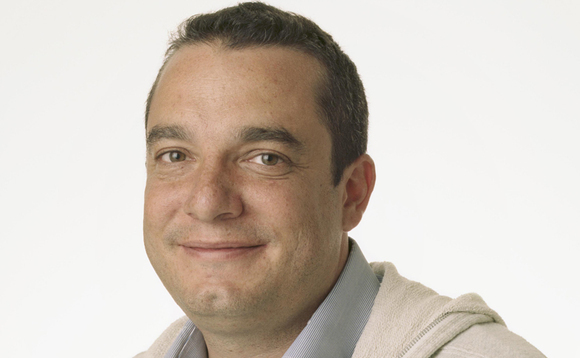
Lessons from Silicon Wadi
  • Amy King
  • 10 September 2012
  • Tweet  
  • Facebook  
  • LinkedIn  
  • Google plus  
  • Send to  

Israelт€™s position as the country with the most start-ups per capita has prompted talk of the nation as the worldт€™s next venture hotspot. But the industry is in fact well-established and has a thing or two to teach European VCs and entrepreneurs. Amy King investigates

Israel punches above its weight on the venture capital scene. In terms of research and development expenditure as a percentage of GDP and start-up numbers per capita, it is the reigning champion. When it comes to the latter, the nation of just 7.7 million more than doubles that of the second place US. Global VC players including Bessemer Venture Partners and Apax have offices out there, and Index Ventures has been investing in Israel since its first fund in the 1990s.

"Israel as an investment opportunity is not a new story," says Saul Klein, a partner at Index. "The pace of foreign investment has increased dramatically over the past few years," he adds. Indeed, around 80% of venture capital investments in Israel are committed by a foreign VC, a further 80% of which originates in the US. Venture capital and entrepreneurship are entrenched features of Israeli culture.

The Israeli government's Yozma programme is widely acknowledged as the seed of what is now an industry in full bloom. Launched in the 1990s, the mechanism was simple. The government shared investment risk by providing capital commitments to VC funds alongside that raised by the fund manager, but later sold its stakes in successful firms for the same price as it paid upon purchase. All rewards were returned to investors. "This improved returns dramatically," says Yoram Tietz, managing partner at Ernst & Young in Israel. "Most of the funds were around $20m and enjoyed IRRs of close to three digits," he adds. The government's recent introduction of an insurance scheme for Israeli institutions contributing to VC funds has helped improve an underdeveloped source of funding. But what else has contributed to Israel's success in innovation?

"I think on the whole there is a bit of a misconception about innovation," says Saul Singer, author of Start-Up Nation: the Story of Israel's Economic Miracle. "People tend to think innovation is all about ideas. Just look at any magazine cover about innovation or search the word in Google images and you will get an image of a light-bulb. But I think the Israeli example shows that it isn't about ideas per se. Many countries rank higher than Israel in terms of patent-density, but lower in terms of start-ups," he adds.

According to Singer, the Israeli recipe includes two ingredients that are scarce elsewhere: the mission orientation and a willingness to take risk. The mission orientation stems from the nation's obligatory military service, which sees all citizens gain army experience. "What people learn in the military is that you have a mission, but you have constraints in terms of time and resources, and you can't fail. And that is very akin to what it is like working in a start-up," says Klein. "People aren't necessarily starting businesses to get rich, they are starting businesses to solve problems," he adds. The cultural traditions of the nation are shaping its entrepreneurs; hardly surprising from a nation that is itself essentially a start-up – necessity is, after all, the mother of invention.

When it comes to willingness to take risks, it appears an innate part of the nation's psyche. "The social atmosphere in Israel celebrates entrepreneurship," says Tietz. "Everywhere I go people say they are not open to taking risk, that their country just doesn't foster entrepreneurial culture," adds Singer. "And that may be true, but that doesn't mean you can't build an innovation subculture. The US case shows that you can create an entrepreneur-friendly subculture," he explains. "What is unusual about Israel is that the subculture in the US is basically the mainstream culture in Israel, which has come out of our history of overcoming adversity. Israelis have the sense that taking risk is part of succeeding."

But with the key ingredients in place for a thriving start-up culture, many cite the shortage of home-grown billion dollar companies as Israel's shortcoming. The most common exit route for VCs in Israel is the trade sale to a foreign player. In 2011, there were 33 VC-backed M&A deals in Israel with a total deal value of $2.52bn, a 102% increase on the previous year's total deal value according to data published by the Israeli Venture Capital Research Center. Only five IPOs of Israeli companies took place that year, down from the 11 seen the previous year. Israeli VC-backed companies seem to reach a certain size before an exit. "That is very much part of our ecosystem," says Singer, "and also what people complain about regularly. We call this 'Nokia-envy' because people frequently ask where our big company is coming out of a small country."

But is it really a problem? "I think that, as much as everybody idolises the idea of having a multi-billion dollar Israeli company emerge, in today's market conditions that is wishful thinking," says Tietz. And Singer agrees: "It's not such an important metric for me. People think that Israeli entrepreneurs exit early through impatience or greed, but it's more that entrepreneurs like to be entrepreneurs," he says. "The things you have to do to scale a company – looking at management, sales teams, marketing – are usually fairly far from the entrepreneur's original innovation. They usually aren't great at that side of things, and have an idea for their next start-up." What's more, as the pace of change accelerates globally, innovation is becoming a more and more acute focus of companies across the world trying to keep up with competitors. "I think therefore that the premium on start-ups will grow, because that's where innovation is most intense. And in Israel we are sitting on a major piece of this," says Singer.

In fact, the early exit to a trade-player could actually be what sustains the venture ecosystem in Israel and not its downfall. As high-tech giants such as Apple, Amazon and Google see their balance sheets grow to unprecedented levels, they need to put that capital to work. "You don't get any returns on cash in today's capital markets," says Tietz, "so these tech giants have a tendency to buy all start-ups of a certain worth. And that is actually what attracts VCs, because they know that in seven or so years' time, somebody will buy the firm for $200-300m, acquiring the IP and knowledge that they need to grow their firm further. This is what makes the equilibrium work," he adds. Indeed nine of the fifteen M&A deals above the $100m mark recorded last year were VC-backed.

"Countries appear blind to their own strengths," says Singer. "Each nation has its own path to innovation based on its history, culture and circumstances. Look at the US compared to Israel. It is a big country with lots of resources and it is not neighboured by an enemy. It had none of the adversity that Israel faced, yet it produced Silicon Valley," he adds. "In Israel we always complain about not being able to build big companies, but that self-deprecating approach takes our strengths for granted. That's true of every country and is a bit of a problem, as each country needs to build its innovation sector on what it's good at," he says. European VCs need to remain on their own path to growth, while taking some direction from the Israeli example.

  • Tweet  
  • Facebook  
  • LinkedIn  
  • Google plus  
  • Send to  
  • Topics
  • Benelux
  • CEE
  • DACH
  • France
  • Nordics
  • Southern Europe
  • UK / Ireland
  • Index Ventures
  • Ernst & Young

More on Benelux

Gimv acquires majority stake in Witec

Belgium-based Gimv set to support Netherlands-headquartered contract design manufacturer’s growth

  • Benelux
  • 26 April 2023
Bencis raises EUR 123m continuation fund for group of Fund IV assets

Secondary deal was led by Committed Advisors and will provide backing for future growth of four portfolio companies

  • Benelux
  • 30 March 2023
Holland exits Mauritskliniek in sale to PE-backed Corius

Sale of Dutch dermatology group comes nine months after regulator blocked sale to Triton's Bergman

  • Benelux
  • 16 September 2022
Unquote Private Equity Podcast: Growth equity's mounting momentum

Bregal Milestoneт€™s Cyrus Shey and HPE Growthт€™s Manfred Krikke discuss investing, operational support and what's next for the industry

  • Benelux
  • 15 August 2022

Latest News

Partners Group to release IMs for Civica sale in mid-September
  • Exits
Stonehage Fleming raises USD 130m for largest fund to date, eyes 2024 programme

Sponsor acquired the public software group in July 2017 via the same-year vintage Partners Group Global Value 2017
  • 04 September 2023
BHM Group builds on PE strategy, eyes European medtech and renewable energy acquisitions
  • Investments
Stonehage Fleming raises USD 130m for largest fund to date, eyes 2024 programme

Czech Republic-headquartered family office is targeting DACH and CEE region deals
  • 01 September 2023
Redalpine expands leadership team amid CHF 1bn-plus fundraise
  • Venture
Stonehage Fleming raises USD 130m for largest fund to date, eyes 2024 programme

Ex-Rocket Internet leader Bettina Curtze joins Swiss VC firm as partner and CFO
  • 31 August 2023
Change Ventures aims to hold final close for EUR 20m third fund by mid-2024
  • Funds
Stonehage Fleming raises USD 130m for largest fund to date, eyes 2024 programme

Estonia-registered VC could bolster LP base with fresh capital from funds-of-funds or pension funds

  • 31 August 2023
Back to Top
  • About Unquote
  • Advertise
  • Contacts
  • About Acuris
  • Terms of Use
  • Privacy Policy
  • Group Disclaimer
  • Twitter
  • LinkedIn

© Merger Market

© Mergermarket Limited, 10 Queen Street Place, London EC4R 1BE - Company registration number 03879547

Digital publisher of the year 2010 & 2013

Digital publisher of the year 2010 & 2013