

• Home
  •  
    Regions
    • Europe
    • UK & Ireland
    • DACH
    • Nordic
    • France
    • Southern Europe
    • Benelux
    • CEE
    • Asia
  •  
    Deals
    • Buyouts
    • Venture
    • Exits
    • Refinancings
    • Build-up
    • Turnaround
    • Secondaries
    • Advanced deal search
  •  
    Funds
    • Buyout
    • Venture
    • Mezzanine
    • Debt
    • Funds-of-funds
    • Secondaries
    • Fundraising pipelines
    • Advanced funds search
  •  
    GPs & LPs
    • GP profiles
    • LP profiles
    • GP news
    • LP news
    • Sponsors search
    • LPs search
  •  
    Secondaries
    • Deals
    • Funds
    • News
    • Analysis
  •  
    People
    • Q&A
    • Videos
    • Comment
    • Analysis
    • People moves
    • In Profile
  •  
    Analysis
    • Videos
    • Q&A
    • Comment
    • In Profile
    • Podcast
    • Fundraising
    • Reports
    • Data Snapshots
  •  
    Unquote Data
    • Deals search
    • Exits search
    • Funds search
    • Sponsors search
    • Advisers search
    • LPs search
    • League tables
    • Reports
  • Sign in
  • Sign in
    • You are currently accessing unquote.com via your Enterprise account.

      If you already have an account please use the link below to sign in.

      If you have any problems with your access or would like to request an individual access account please contact our customer service team.

      Phone: +44 (0)203 741 1137

      Email: Georgina.Lawson@acuris.com

      • Sign in
     
      • Newsletters
      • Account details
      • Contact support
      • Sign out
     
  • Follow us
    • Twitter
    • LinkedIn
  • Free Trial
  • Subscribe
Unquote
Unquote
  • Home
  • Regions
  • Deals
  • Funds
  • GPs & LPs
  • Secondaries
  • People
  • Analysis
  • Unquote Data
      • Deals search
      • Exits search
      • Funds search
      • Sponsors search
      • Advisers search
      • LPs search
      • League tables
      • Reports
  • You are currently accessing unquote.com via your Enterprise account.

    If you already have an account please use the link below to sign in.

    If you have any problems with your access or would like to request an individual access account please contact our customer service team.

    Phone: +44 (0)203 741 1137

    Email: Georgina.Lawson@acuris.com

    • Sign in
 
    • Newsletters
    • Account details
    • Contact support
    • Sign out
 
UNQUOTE
  • Buyouts

Bridging the gap with employee ownership
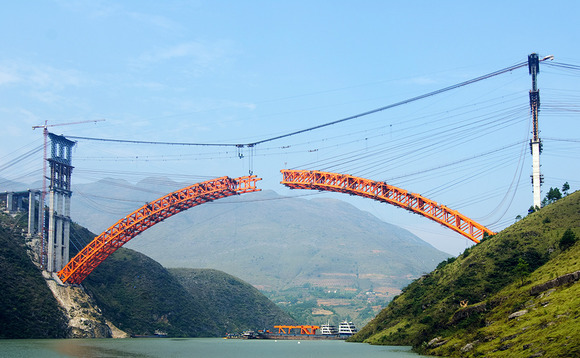

Bridging the gap with employee ownership
  • José Rojo
  • José Rojo
  • 23 October 2015
  • Tweet  
  • Facebook  
  • LinkedIn  
  • Google plus  
  • Send to  

Employee shareholding could present private equity with a rare opportunity to bridge the gap with portfolio companies – and address wider preconceptions about the industry’s relationship with workers. José Rojo reports

In late September, Carlyle secured a 51% stake in London-headquartered firm PA Consulting in a buyout valued at $1bn. Beyond sheer size, the deal's singularity came from a detail that had been overlooked in the media coverage: PA's employees kept control over the remaining 49% stake post-takeover.

So is PA Consulting an isolated case within European private equity or a sign that change is on its way? According to DLA Piper partner Ed Griffiths, there is every reason to believe the former: "The participation of key management figures alongside institutional investors is a fundamental feature of private equity but broader schemes remain less common; the perceived benefits are still limited and are unlikely to justify the complexity associated with the model."

He highlights the administrative costs and legal challenges: "Having a relatively large shareholder base can be unwieldy and make reorganisations and divestments marginally more difficult to implement." Griffiths' observations add to the traditional arguments discouraging GPs from allowing the workforce a slice of the equity cake: the scheme is difficult to design and execute; it can dilute the pot of incentives for the senior executives; it may demand greater worker access to the company's financial figures, and so on.

Challenges aside, Griffiths concedes there is value in GPs respecting existing employee ownership schemes when they approach a company; dismantling them could lead to a demotivated workforce. The model works best with assets such as law firms and consultancies, where a tradition for equity partnership means there are larger numbers of senior figures who would expect to hold equity. However, Griffiths questions the sense of labelling these arrangements as "employee ownership": "The term can mask the fact that ownership is concentrated in a limited number of the equivalent of ‘equity partners', with other participants likely to receive a minimal share."

France leading the way
Although employee ownership is marginal when looking at European private equity as a whole, the picture differs from region to region, says Griffiths: "This is still not a prevalent trend in the UK or continental Europe. However, there are differences in culture and legislation, with certain European jurisdictions giving employees greater influence over the running of their company than the UK, which could drive demand for such schemes in those countries."

A 2014 report from the European Federation of Employee Share Ownership (EFES) found France leading the way, with 80% of the companies surveyed running a broad employee share plan, against a 47.5% average for the rest of Europe. In addition, the schemes were taken up by an average of 45% of the workforce, compared to 24.4% across the continent. Some French private equity GPs have been keen to build on these foundations. Seven years ago, Ardian CEO Dominique Senequier called for policy changes allowing workers to take part in the LBO process. "This would generate purchase power, and reward employees with some of the wealth they contributed to create. Social justice and economic efficiency aren't just compatible, they might reinforce one another," she said in Le Monde in 2008.

One of the most active houses in putting the model to the test in France is Astorg Partners. In 2009, the firm picked up Parisian insurance broker Gras Savoye from the Gras and Lucas families, which owned a 51% stake, while the remainder belonged to US broker Willis Group. Following the deal with Astorg, ownership of the business was split three ways, with 31.8% stakes for the GP, Willis and the two families – the remaining 4.6% was secured by the employees and management.

Gras Savoye was no stranger to employee ownership and under Astorg's tenure, the company's existing scheme remained in place. After meetings were held with employees to ensure they understood the process, 54% of them decided to take part. Their investment was channelled via a Fonds Commun de Placement d'Entreprise (FCPE), a fund structure to formalise employee ownership schemes in France. By 2015, as Astorg began working on a stake sell-off to Willis, Gras Savoye's workforce had reaped €4 for every €1 they had committed in 2009.

"On the one hand, those returns are the consequence of our overall performance with Gras Savoye," says Christian Couturier, a partner at Astorg. "To that, one has to add the effect of the leverage that Astorg put in place in 2009, plus the employer's contribution that meant that Gras Savoye matched what its employees provided."

Gras Savoye is not the only business in Astorg's portfolio to have embraced employee ownership. The list includes drug delivery specialist Ethypharm, where the firm controls a 60% stake following a 2007 buyout, and glass container manufacturer Saverglass, acquired from Nixen Partners in 2011. Telecoms service Trescal, photo-sensor manufacturer Photonis and funeral house OGF Group also had similar plans in place. In all the aforementioned companies, employee engagement in the investment scheme ranged between 30% and 90%, according to Couturier.

Although Astorg is a strong proponent of employee ownership, its introduction has not been without complications, says partner Xavier Moreno: "First, there is the need to protect employees to a greater degree than other shareholders so that they at least get back what they invested if difficulties hit."

One strategy to ensure this is to allow the workforce to only enter the operating company, while the holding company stays off-limits – employees are thus unaffected by leverage and the risks it entails. Once a secondary buyout takes place, a number of employees are given the chance to re-invest the proceeds in the newco and assume greater risks if they want. The two-layer approach was followed by veterinary drug developer Ceva Santé Animale, which has seen four private-equity-backed LBOs since inception, according to unquote" data.

Dialogue to bridge the gap
Another challenge is how employee shareholding adapts to an increasingly cross-border environment. "We find our portfolio companies are more internationalised as they set up subsidiaries outside France. The FCPE system is only operative in our country and it is hard to keep it up outside our borders," says Couturier.

In addition, GPs must consider the high reporting requirements to the regulators that oversee the process, as well as the need to explain the scheme to a workforce that may be unfamiliar with it.

However, as much as it can be arduous, the dialogue with the worker base is the very element that brings them closer to the private equity manager, says Moreno: "When one offers employees the chance to come on board, they usually respond well and ask the right questions, such as what is happening with the leverage or how will their commitments be financed."

Once invested in the capital structure, the workforce tends to relate more to the direction the company is taking, adds Moreno. "When we exit these companies, the new LBO is put to the vote of the workers council. So far, the response has been positive, even when the investment period featured a number of lay-offs. Employee shareholding can change the course of the decision-making process in a portfolio company."

As competition for quality assets picks up, European GPs are increasingly pushed to develop innovative approaches to stand out from the crowd; empowering employees at all levels within a business to benefit from value creation could be a challenging, but, ultimately, rewarding strategy. 

  • Tweet  
  • Facebook  
  • LinkedIn  
  • Google plus  
  • Send to  
  • Topics
  • Buyouts
  • Performance
  • Employee ownership
  • Top story
  • Carlyle Group
  • Astorg Partners
  • unq2015nov

More on Buyouts

Permira to take Ergomed private for GBP 703m

Sponsor deploys Permira VIII to ride new wave of take-privates; Blackstone commits GBP 200m in financing for UK-based CRO

  • Buyouts
  • 04 September 2023
Main Capital's Assessio to be sold to Pollen Street

Recruitment software company tripled in revenue under Main Capital’s ownership

  • Buyouts
  • 25 August 2023
TPG takes majority control of A-Gas, doubles down on impact investing

KKR partially exits its 2017 investment in the specialty gas and chemical distributor, retaining a minority stake

  • Buyouts
  • 18 August 2023
Quadrivio to capitalise on baby boomers as it nears wrap for its new EUR 300m fund

The Silver Economy Fund makes its second investment as it highlights trend of GPs doubling down on narrow strategies

  • Buyouts
  • 16 August 2023

Latest News

Partners Group to release IMs for Civica sale in mid-September
  • Exits
Stonehage Fleming raises USD 130m for largest fund to date, eyes 2024 programme

Sponsor acquired the public software group in July 2017 via the same-year vintage Partners Group Global Value 2017
  • 04 September 2023
BHM Group builds on PE strategy, eyes European medtech and renewable energy acquisitions
  • Investments
Stonehage Fleming raises USD 130m for largest fund to date, eyes 2024 programme

Czech Republic-headquartered family office is targeting DACH and CEE region deals

  • 01 September 2023
Redalpine expands leadership team amid CHF 1bn-plus fundraise
  • Venture
Stonehage Fleming raises USD 130m for largest fund to date, eyes 2024 programme

Ex-Rocket Internet leader Bettina Curtze joins Swiss VC firm as partner and CFO
  • 31 August 2023
Change Ventures aims to hold final close for EUR 20m third fund by mid-2024
  • Funds
Stonehage Fleming raises USD 130m for largest fund to date, eyes 2024 programme

Estonia-registered VC could bolster LP base with fresh capital from funds-of-funds or pension funds

  • 31 August 2023
Back to Top
  • About Unquote
  • Advertise
  • Contacts
  • About Acuris
  • Terms of Use
  • Privacy Policy
  • Group Disclaimer
  • Twitter
  • LinkedIn

© Merger Market

© Mergermarket Limited, 10 Queen Street Place, London EC4R 1BE - Company registration number 03879547

Digital publisher of the year 2010 & 2013

Digital publisher of the year 2010 & 2013