

LP interview: Alpha Associates' Petra Salesny
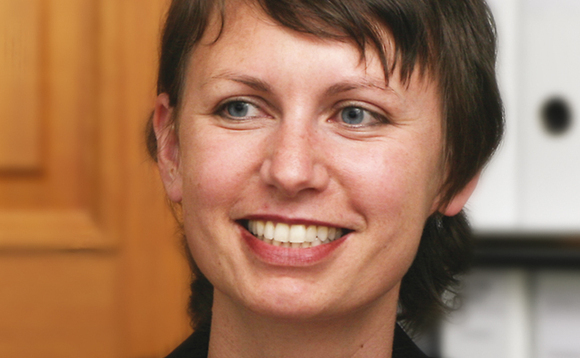
With a growing middle class, Central & Eastern European countries are rapidly moving from being developing to developed countries. John Bakie talks to Alpha Associates' Petra Salesny about the opportunities this presents.
John Bakie: What sort of criteria are you looking at when selecting investments?
Petra Salesny: We pursue a threefold investment strategy with our CEE funds-of-funds: we make primary commitments, buy mature fund interests in secondary transactions and make direct co-investments. In our primary portfolio we are looking to invest in a diversified range of funds operating in the upper and lower mid-market as well as at the small end of the market in Central & Eastern Europe. The overriding theme for private equity investing in the CEE countries is businesses that serve the needs of the growing middle class. We primarily look at funds investing in buyouts and later-stage expansion financing. We feel venture in CEE is currently not worth allocating to as there are very few successful funds in this area.
Secondaries are an important part of our strategy and we are uniquely positioned to access secondary opportunities in CEE and CIS. Typically, we source and negotiate transactions privately. We've seen many distressed sellers after the crisis.
JB: You mentioned you have seen a lot of distressed sellers. Are there a lot of struggling investors at the moment?
PS: Immediately after the financial crisis, many investors sought to liquidate what they could or needed to reduce their commitments. Today, sellers are not as distressed as they were and more of the activity is driven by regulatory changes. Banks and insurance companies looking to comply with Basel III and Solvency II are major sellers in the market now.
JB: Some Western European fund managers have come under fire over the 2 & 20 pricing model. Is this also an issue for LPs investing in CEE?
PS: For us, it's about generating absolute net returns that are attractive and fees are taken into account when assessing this. In CEE we don't really have the huge funds like in Western Europe, the US or also some other emerging markets, which create concern over the hefty management fees. CEE private equity is a middle-market play and the CEE managers are not going to make themselves rich off the management fee.
JB: Which geographies and sectors across CEE are most interesting for you at the moment?
PS: CEE is not a homogenous region and this is something that the financial crisis has further highlighted. Russia aside, Poland and the Czech Republic are the strongest economies in the CEE region and have recovered well from the crisis; in fact Poland was the only country throughout Europe that grew during the crisis. Countries like Romania take a bit longer to recover and Hungary has numerous home-made problems. The countries we feel are most interesting to invest in right now are Poland, Russia, the Czech Republic and Slovakia. Turkey is also interesting but there's a risk it could be overheating.
In terms of sectors, the strongest dealflow comes from consumer products and services, telecommunication, financial services, industrials, IT and healthcare. These are also our main exposures.
Latest News
Stonehage Fleming raises USD 130m for largest fund to date, eyes 2024 programme
Sponsor acquired the public software group in July 2017 via the same-year vintage Partners Group Global Value 2017

Stonehage Fleming raises USD 130m for largest fund to date, eyes 2024 programme
Czech Republic-headquartered family office is targeting DACH and CEE region deals

Stonehage Fleming raises USD 130m for largest fund to date, eyes 2024 programme
Ex-Rocket Internet leader Bettina Curtze joins Swiss VC firm as partner and CFO

Stonehage Fleming raises USD 130m for largest fund to date, eyes 2024 programme
Estonia-registered VC could bolster LP base with fresh capital from funds-of-funds or pension funds