

Q&A: Funds-of-funds and direct investments
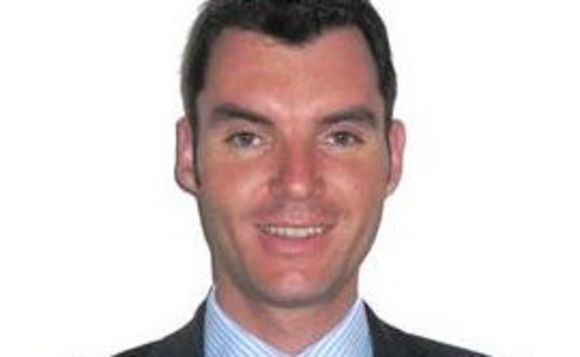
Emanuel Eftimiu speaks to Marc Brugger, managing director of fund-of-funds LFPE, about the pros and cons of direct investing and the difficulties facing private equity funds-of-funds in the current environment.
What do you see as the biggest challenges for private equity funds-of-funds at the moment?
Broadly speaking, I see two main challenges: some fund-of-funds programmes are suffering from an over-commitment strategy initiated before the crisis, while others are suffering from a large part of their capital remaining undrawn (even though part of it is already committed). This has to do with the slow investment pace of the underlying funds and can also lead to conflicts between GPs and LPs.
In the current environment, is there more pressure from LPs on fund-of-funds managers to tailor their products?
I think there is no general answer to this quandary. Trustful and longstanding relationships with your LPs are key so that you can react (as a fund-of-funds manager) more actively to the market environment, which has changed so dramatically. As a concrete example, in our programme we have significantly boosted our direct co-investment practice, as well as our secondary purchase programme. This hybrid model allows us to execute attractive direct deals, both on an equity and a mezzanine level.
Why is there a shift towards direct investing?
Firstly, this shortens the payback period and allows a quicker cash return to our own investors. In the case of our mezzanine co-investments, the cash component has been used as an element to flatten the j-curve.
However, direct investments are not for everybody; you need to have a long-established relationship with a GP, the necessary expertise for GPs to consider you for co-investments and the ability to execute such transactions quickly. Quite a lot of funds-of-funds and other LPs request co-investment invitations, but not that many are actually active these days.
LFPE has made five direct co-investments in 2010 already, as we consider the current investment climate to be favourable. Three of them were equity deals, one was a mixture of equity and mezzanine, and one was a pure mezzanine deal, in which we were the only provider of such financing. Looking at our pipeline, I anticipate further such transactions for the remainder of the year.
How important will scale be for funds-of-funds going forward?
This depends a lot on your strategy, of course. If you are targeting the lower mid-cap arena (as we are doing) then a €1bn programme is simply not feasible, as you would not be able to put that much capital to work. Size matters, but when your smallest entry ticket is €50m you tend to exclude yourself from many interesting opportunities. Last but not least, such mega-funds-of-funds also often lack the flexibility we were talking about earlier so, in the end, I doubt that they deliver superior returns these days
Latest News
Stonehage Fleming raises USD 130m for largest fund to date, eyes 2024 programme
Sponsor acquired the public software group in July 2017 via the same-year vintage Partners Group Global Value 2017
Stonehage Fleming raises USD 130m for largest fund to date, eyes 2024 programme
Czech Republic-headquartered family office is targeting DACH and CEE region deals

Stonehage Fleming raises USD 130m for largest fund to date, eyes 2024 programme
Ex-Rocket Internet leader Bettina Curtze joins Swiss VC firm as partner and CFO
Stonehage Fleming raises USD 130m for largest fund to date, eyes 2024 programme
Estonia-registered VC could bolster LP base with fresh capital from funds-of-funds or pension funds