
Looking East
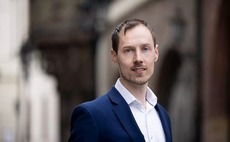
Rikke Eckhoff talks to Peter Laib, managing director of Adveq, about their tripolar investment thesis and the incestuous Nordic markets
Any investor or service provider in the financial world, be it alternatives, equities or bonds, needs to have one view or another on the economic outlook. For private equity fund-of-funds Adveq, this outlook is evident in two basic assumptions: Firstly, he believes in a tripolar world, where the US, European and Asian private equity and venture markets take on an equal size and importance. And secondly, the recovery for Europe and the US will be L or even W-shaped - long and painful.
So what implications do these two hypotheses have for Adveq's investment strategy? In short, a vastly differentiated one In the US, the investor has mainly put its capital in turnaround and distressed funds, in addition to specialist technology vehicles. In Europe, Adveq has put its faith in the small- and mid-cap buyout space, which it believes will continue to grow - driven by accelerated European integration. More bullish optimism is reserved for Asia.
"In the late nineties and early noughties, we saw the first wave of opportunities in Asia; however, there was no systematic investment activity," Laib explains. While US and European private equity was building its credit bubble in the years leading up to 2006, the Asian markets developed, partly driven by US fund managers setting up shops and cooperations. Today, as the rest of the private equity world is licking its wounds, scores of Asian fund managers are ready to benefit from the region's stable growth figures, forecast at 6-8% or more.
"Investors are also more confident to place their money there, as the regulatory environment and tax systems are now proven," Laib continues. "In 2010, interest in Asian funds will increase," he says, clearly on a mission to convince. "In our experience, even Nordic investors are looking East."
He is not wrong to say "even" Nordic. The region has traditionally been relatively inward-looking in its investments, with most funds focusing their deal origination efforts locally, often with a view to turning a regional or domestic player into a pan-Nordic player. The most cited explanation is obviously the cultural commonalities.
However, Laib maintains that this is too simplistic, offering an alternative hypothesis. It wasn't until a few years ago that the regulatory restrictions on the geographic remit of public pension funds' investments into private equity were lifted. "To some extent, this can have artificially driven the Nordic-centric investment focus of many GPs and LPs in the region," Laib suggests.
Indeed, although some great innovations and venture successes have come out of the research communities up North, Laib questions the viability of some funds. This despite the shake-out the industry saw, and is still seeing, following the burst of the dotcom bubble.
"Because of the characteristics of venture investing such as lifespans of 10+3 and 'money aside' for follow on investments, a shake-out in the venture community always takes longer," Laib says. This, though, does not mean he has written off the segment - quite the opposite: "We are always interested in segments people tend to neglect," he asserts. Especially today, with US endowments giving up positions in some of the leading venture managers, Laib sees "tremendous opportunities" in the US venture segments particularly.
With commitments to early-stage and expansion funds steadily decreasing, this means that over the next few years, only premium funds, so-called "top-tier", will get funded. So a gamble on venture with the 2010 budgets might actually turn out to be a good bet.
For some large buyouts, on the other hand, the worst may be yet to come, and the shake-out will be faster as the commitment cycle is shorter and problems surface more quickly. Particularly, meeting the covenants of some debt packages agreed at the peak of the credit boom will be near impossible. Laib predicts we will see the fund manager population shrink by 30-40% in Europe. "The real test will come in 2011-2013, when some of the debt packages are due for resets."
So what does it take for a fund to secure a commitment from Adveq? Laib has an extensive list of risk and return assessment criteria, including "never underperformed" and "broad teams" in terms of knowledge, experience and expertise. "Crucially," he says, "they must show a significant value add to their portfolio companies, and they have to be able to secure financing, either in terms of debt for buyout funds, or own - and other GP - capital for venture investors, to follow investments through." He adds the incentive structure within the fund is important, as is a good corporate governance profile. And with the next rounds of fundraising to come 2010-2011, fund managers can do nothing but comply.
Latest News
Stonehage Fleming raises USD 130m for largest fund to date, eyes 2024 programme
Sponsor acquired the public software group in July 2017 via the same-year vintage Partners Group Global Value 2017
Stonehage Fleming raises USD 130m for largest fund to date, eyes 2024 programme
Czech Republic-headquartered family office is targeting DACH and CEE region deals

Stonehage Fleming raises USD 130m for largest fund to date, eyes 2024 programme
Ex-Rocket Internet leader Bettina Curtze joins Swiss VC firm as partner and CFO
Stonehage Fleming raises USD 130m for largest fund to date, eyes 2024 programme
Estonia-registered VC could bolster LP base with fresh capital from funds-of-funds or pension funds