
• Home
  •  
    Regions
    • Europe
    • UK & Ireland
    • DACH
    • Nordic
    • France
    • Southern Europe
    • Benelux
    • CEE
    • Asia
  •  
    Deals
    • Buyouts
    • Venture
    • Exits
    • Refinancings
    • Build-up
    • Turnaround
    • Secondaries
    • Advanced deal search
  •  
    Funds
    • Buyout
    • Venture
    • Mezzanine
    • Debt
    • Funds-of-funds
    • Secondaries
    • Fundraising pipelines
    • Advanced funds search
  •  
    GPs & LPs
    • GP profiles
    • LP profiles
    • GP news
    • LP news
    • Sponsors search
    • LPs search
  •  
    Secondaries
    • Deals
    • Funds
    • News
    • Analysis
  •  
    People
    • Q&A
    • Videos
    • Comment
    • Analysis
    • People moves
    • In Profile
  •  
    Analysis
    • Videos
    • Q&A
    • Comment
    • In Profile
    • Podcast
    • Fundraising
    • Reports
    • Data Snapshots
  •  
    Unquote Data
    • Deals search
    • Exits search
    • Funds search
    • Sponsors search
    • Advisers search
    • LPs search
    • League tables
    • Reports
  • Sign in
  • Sign in
    • You are currently accessing unquote.com via your Enterprise account.

      If you already have an account please use the link below to sign in.

      If you have any problems with your access or would like to request an individual access account please contact our customer service team.

      Phone: +44 (0)203 741 1137

      Email: Georgina.Lawson@acuris.com

      • Sign in
     
      • Newsletters
      • Account details
      • Contact support
      • Sign out
     
  • Follow us
    • Twitter
    • LinkedIn
  • Free Trial
  • Subscribe
Unquote
Unquote
  • Home
  • Regions
  • Deals
  • Funds
  • GPs & LPs
  • Secondaries
  • People
  • Analysis
  • Unquote Data
      • Deals search
      • Exits search
      • Funds search
      • Sponsors search
      • Advisers search
      • LPs search
      • League tables
      • Reports
  • You are currently accessing unquote.com via your Enterprise account.

    If you already have an account please use the link below to sign in.

    If you have any problems with your access or would like to request an individual access account please contact our customer service team.

    Phone: +44 (0)203 741 1137

    Email: Georgina.Lawson@acuris.com

    • Sign in
 
    • Newsletters
    • Account details
    • Contact support
    • Sign out
 
UNQUOTE
  • Investments

How to Pick Winners

  • 20 November 2008
  • Tweet  
  • Facebook  
  • LinkedIn  
  • Google plus  
  • Send to  

Despite the age-old adage that backing sound management is paramount, a new study reveals that people are less important than the product.

Some venture capitalists believe a company's product and market are the key determinants of its success, while others believe the company's management team holds the key. This debate is often characterised as whether backers should bet on the jockey (management) or the horse (product/market) when selecting their investments.

For example, Donald Valentine of Sequoia Capital focused on the market for the product or service, looking for large and growing markets. He invested in a little-known start-up called Cisco in 1987 because he saw a large market, even though the company had been shunned by many other investors who thought it did not have a strong management team.

On the other hand, Arthur Rock, a legendary VC and investor in Fairchild and Apple, emphasised the quality, integrity and commitment of the management team. According to Rock: "A great management team will find a good opportunity even if they have to make a huge leap from the market they currently occupy."

This debate is addressed in a recent study by University of Chicago Graduate School of Business professor Steven N. Kaplan, Per Strömberg of the Sweden Institute for Financial Research, and Berk A. Sensoy of the University of Southern California - "Should Investors Bet on the Jockey or the Horse? Evidence from the Evolution of Firms from Early Business Plans to Public Companies (see below).

The authors interpret the results as favoring the product/market (horse) view of VC investing more than the best-available-management-team (jockey) view. They concluded that very early on in a company's life, it is the business that is more important for a new firm's success. The firms in the study stressed the importance of proprietary intellectual property, patents, and physical assets in all of its stages, and these characteristics became increasingly important over time.

At a relatively early stage, the businesses were fixed and did not appear to change appreciably. At the same time, it appears that VCs were regularly able to find replacements for their management teams if they were not appropriate for the business. The authors did not find cases in which VCs invested in good managers and significantly altered the company's business. In other words, the jockeys changed, but the horses didn't.

The authors stress that this should not be interpreted that specific human capital is unnecessary or unimportant. Human capital is essential, but the specific person appears less so. When you have a business with strong non-people assets, you have something that is enduring, and you can start finding the right people to work with those assets. So, in contrast to nonhuman assets, the importance of specific people and initial expertise diminishes early in the firm's life cycle. Once the firm's nonhuman assets are established, it seems possible (and not unusual) to find other people to run the firm.

While the results may seem controversial to some, it fits with one of Warren Buffett's well-known statements: "When a management team with a reputation for brilliance backs a business with a reputation for bad economics, it is the reputation of the business that remains intact."

The study

  • The authors studied 50 companies financed by venture capitalists from business plan to public company. For each they classified and described the firm's financial performance, business idea, points of differentiation, nonhuman capital assets, growth strategy, customers, competitors, alliances, top management, ownership structure, and board of directors. They also assessed which characteristics stay constant, change, or disappear as companies evolve.
  • While the authors observed broadening or narrowing of business focus, only one of the companies in the sample changed its line of business or basic business model. The authors did not observe any of the companies undertaking acquisitions unrelated to the original business. This suggests that the initial business lines and/or accompanying attributes of those businesses do not change.
  • Through the entire evolution of a company, the firms were focused on internal growth. The firms aimed to produce new or upgraded products, adding customers via increased market penetration or market leadership. The firms also planned to expand geographically. All three types of internal growth peaked at the time of the IPO.
  • At the business plan stage, only 47 percent of the firms had customers. These figures increased to 90 percent at the IPO and 95 percent by the annual report. The majority of companies addressed a similar customer base, either business or consumer, during all three stages. The results suggest that the firms' dramatic revenue increases were primarily driven by selling more to an initial customer type through increased market penetration or by selling additional products.
  • To assess the human capital aspects of the firm, the authors looked at the top five executives described in the business plan, IPO prospectus, and annual report. Founders were heavily involved with the companies at the time of the business plan, but their involvement subsequently declined. CEO turnover was relatively low from the business plan to the IPO, with 84 percent of CEOs remaining in place. The turnover of the CEO and five other top executives was more common after the company went public. From the initial business plan to the annual report, only 50 percent of the CEOs and 25 percent of the other top five executives remained the same.

Article contributed by Steven N. Kaplan, the Neubauer Family Professor of Entrepreneurship and Finance, and Faculty Director of the Michael P. Polsky Center for Entrepreneurship at the University of Chicago Graduate School of Business.

  • Tweet  
  • Facebook  
  • LinkedIn  
  • Google plus  
  • Send to  
  • Topics
  • Investments
  • UK / Ireland
  • DACH
  • Nordics
  • France
  • Southern Europe
  • Benelux
  • CEE

More on Investments

Change of mind: Sponsors take to de-listing their own assets

EQT and Cinven seen as bellweather for funds to reassess options for listed assets trading underwater

  • Investments
  • 04 September 2023
BHM Group builds on PE strategy, eyes European medtech and renewable energy acquisitions

Czech Republic-headquartered family office is targeting DACH and CEE region deals

  • Investments
  • 01 September 2023
Evoco expects portfolio acquisitions, assesses potential exits in 2H23

Switzerland-headquartered GP is currently deploying equity via its EUR 162m Evoco TSE III fund
  • Investments
  • 21 August 2023
Turning the tables – an M&A downturn means investment banks are now targets themselves

Some dealmakers with healthy balance sheets and willingness to go countercyclical are pursing acquisitions

  • Investments
  • 14 August 2023

Latest News

Partners Group to release IMs for Civica sale in mid-September
  • Exits
Stonehage Fleming raises USD 130m for largest fund to date, eyes 2024 programme

Sponsor acquired the public software group in July 2017 via the same-year vintage Partners Group Global Value 2017

  • 04 September 2023
BHM Group builds on PE strategy, eyes European medtech and renewable energy acquisitions
  • Investments
Stonehage Fleming raises USD 130m for largest fund to date, eyes 2024 programme

Czech Republic-headquartered family office is targeting DACH and CEE region deals

  • 01 September 2023
Redalpine expands leadership team amid CHF 1bn-plus fundraise
  • Venture
Stonehage Fleming raises USD 130m for largest fund to date, eyes 2024 programme

Ex-Rocket Internet leader Bettina Curtze joins Swiss VC firm as partner and CFO
  • 31 August 2023
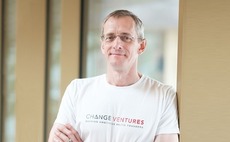
Change Ventures aims to hold final close for EUR 20m third fund by mid-2024
  • Funds
Stonehage Fleming raises USD 130m for largest fund to date, eyes 2024 programme

Estonia-registered VC could bolster LP base with fresh capital from funds-of-funds or pension funds

  • 31 August 2023
Back to Top
  • About Unquote
  • Advertise
  • Contacts
  • About Acuris
  • Terms of Use
  • Privacy Policy
  • Group Disclaimer
  • Twitter
  • LinkedIn

© Merger Market

© Mergermarket Limited, 10 Queen Street Place, London EC4R 1BE - Company registration number 03879547

Digital publisher of the year 2010 & 2013

Digital publisher of the year 2010 & 2013