

LP Profile: Hamilton Lane
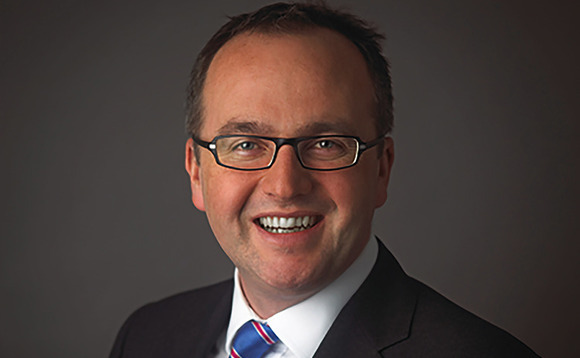

Hamilton Lane last year closed its fourth secondaries fund on $1.9bn, exceeding its $1.25bn target. Denise Ko Genovese speaks to managing directors Jim Strang and Ana Lei Ortiz about the firm's twin-pronged approach, the merits of smaller GP relationship pools and ESG
Hamilton Lane started life in 1991 advising pension funds from a base just outside of Philadelphia, Pennsylvania. The firm's head of Europe, Jim Strang, explains how it was not until the late 1990s that the team ventured into investment management, setting up its first fund-of-funds and introducing a form of hybrid model, which it still practices today. From one office and four employees, the manager now has 15 offices and approximately 340 employees, though Bala Cynwyd, Pennsylvania, remains its headquarters.
"We are a partner to investors in the private markets, across equity, credit and infrastructure," says Strang. "We are constantly bending ourselves to our clients' needs."
"About 20 years ago it was either buyout or venture," says Ana Lei Ortiz, managing director in Hamilton Lane's relationship management and responsible investment team. "But now there are so many more options and we are continuously making sure we are up to date."
In its investment management business, Hamilton Lane had $50bn in assets under management as of 31 December 2017. Approximately $41bn of this is in separate management funds, while the remainder is in co-management and multi-strategy.
Meanwhile, the firm's advisory business had $374bn under supervision, as of the same date. On the advisory side, the client base is 42% non-US, and includes sovereign wealth funds, family offices and other institutional investor types.
In 2017, Hamilton Lane committed approximately $28bn in third-party primary fund commitments with the lion's share going into equity funds. Private equity makes up the bulk of the fund activity with venture taking up a single digit percentage.
"It isn't that we are averse to venture deals," says Strang. "It is just difficult to get the volume, given that we aim to deploy approximately $25bn a year."
The discretionary allocation to Europe is around 15% with the remainder primarily going to North America.
The average ticket size is approximately $200m, across discretionary and advisory. However, the median is approximately $60m, with the most common ticket size roughly $50m.
European PE
Hamilton Lane has more than 50 private equity relationships in Europe (the number triples for the rest of the world), with the manager preferring to concentrate on fewer rather than a large pool of GPs, explains Strang. "We'd rather be a mile deep and an inch wide than a mile wide and an inch deep," he says. "It was our founder's mantra to pick as few deals as possible."
In 2017, there was an additional $2.2bn in transactional investments, including secondaries and co-investments.
The manager held a final closing for its fourth secondaries fund in June 2017 on $1.9bn, exceeding the original $1.25bn target, making it Hamilton Lane's largest secondaries vehicle to date.
Predecessor vehicles include: 2005-vintage HL Secondary Fund I (HLSF I), which closed on $360m and is generating a net IRR of 4.3% and a net multiple of 1.2x; 2008-vintage $590m HLSF II, which is generating a net IRR of 15.1% and a net multiple of 1.5x; and 2012-vintage HLSF III, which closed on $909m and is generating a net IRR of 18.6% and a multiple of 1.3x, as previously reported by Unquote.
Hamilton Lane also has a dedicated co-investment team, which in Europe is led by Richard Hope. There were 25 equity co-invests in 2017, with 30% of capital committed within Europe.
The firm invests alongside GPs whose investment theses and requisite skills it has researched and reviewed. Once an investment is made, Hamilton Lane monitors the company closely but generally is not as involved in the day-to-day activities.
"We look at a range of opportunities that could be anywhere from approximately $10m up to $100m or more," says Strang.
As far as credit is concerned, the manager held a final closing for its latest credit-focused vehicle, Hamilton Lane Strategic Opportunities Fund 2017, on $435m last June. The vehicle is significantly larger than its 2016 predecessor, which closed on $214m.
Responsible investing
"In our view, European LPs have ESG at the front and centre these days, whereas in the US, it's generally only the large LPs – and therefore it's generally only the large GPs who have this on their radar," says Lei Ortiz.
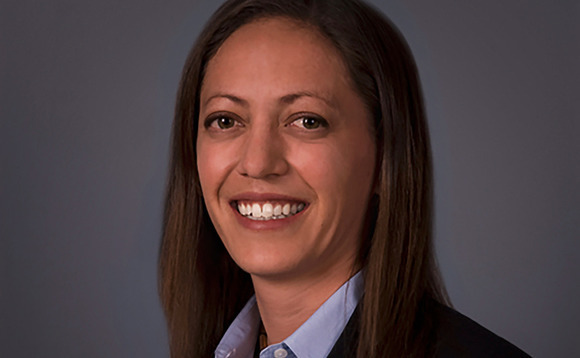
The private markets and private equity are perfect for ESG because there is direct control over the investment, so we started making guidelines for LPs and GPs that included ESG considerations" – Ana Lei Ortiz, Hamilton Lane
Hamilton Lane has been a signatory of Principles for Responsible Investing (PRI) since 2008, helping to incorporate guidance in the industry, and Lei Ortiz sits on PRI's PE advisory committee.
"The private markets and private equity are perfect for ESG because there is direct control over the investment, so we started making guidelines for LPs and GPs that included ESG considerations," says Lei Ortiz. "They hadn't really thought about private markets much before."
Hamilton Lane has been rating GPs on their ESG integration efforts for several years now with the investment manager having declined groups on issues such as governance grounds before.
"ESG is now an agenda item and you can see the likelihood that down the line, people may be more likely to decline a GP because they don't have an ESG policy," says Lei Ortiz, adding that there has been a remarkable improvement in recent years.
The firm rates GPs and funds on their ESG activities and works with clients to help them implement policies. The ESG activities of a GP is now a standard part of LP due diligence and is becoming gradually closer to becoming a requirement.
Key People
• Ana Lei Ortiz, managing director, is responsible for European client relations. Prior to joining Hamilton Lane in 2008, she was an associate director in the corporate, investment banking and markets division of HSBC, covering European corporate and institutional clients.
• Jim Strang, managing director and head of Europe, is an investment committee member and heads the firm's London office. He focuses on investment opportunities across EMEA and primary fund investments in particular. Prior to joining Hamilton Lane in 2011, Strang was a director and head of fund investments at Dunedin Capital Partners.
• Richard Hope, managing director, works in the global investment team. He focuses on both co-investment and secondary transactions. Prior to joining Hamilton Lane in 2011, Hope worked as a director with Alliance Trust Equity Partners, where he helped establish a private equity fund investment business and made a number of direct investments.
More on LPs

European LPs bullish on 2024 PE fund vintages – Coller Capital
LPs remain positive on PE but are considering increasing infra and private credit allocations, latest survey shows

LP Profile: Lennertz & Co gears up for new tech impact venture fund-of-funds
German family office’s new strategy is set to launch this year with a EUR 50m-EUR 100m target

Half of LPs allocating to impact from generalist pool as market matures – Rede Partners
Jeremy Smith and Kristina Widegren speak to Unquote about key takeaways from the private capital adviserтs Private Markets Sustainability and Impact Report

Women in PE: Schroders Capital's Lukas on impact investment and supporting GPs through fundraising woes
Tanja Lukas speaks to Unquote about priorities for the asset managerтs private equity strategy
Latest News

Stonehage Fleming raises USD 130m for largest fund to date, eyes 2024 programme
Sponsor acquired the public software group in July 2017 via the same-year vintage Partners Group Global Value 2017
Stonehage Fleming raises USD 130m for largest fund to date, eyes 2024 programme
Czech Republic-headquartered family office is targeting DACH and CEE region deals

Stonehage Fleming raises USD 130m for largest fund to date, eyes 2024 programme
Ex-Rocket Internet leader Bettina Curtze joins Swiss VC firm as partner and CFO
Stonehage Fleming raises USD 130m for largest fund to date, eyes 2024 programme
Estonia-registered VC could bolster LP base with fresh capital from funds-of-funds or pension funds