

LP interview: Morgan Stanley AIP's Neil Harper
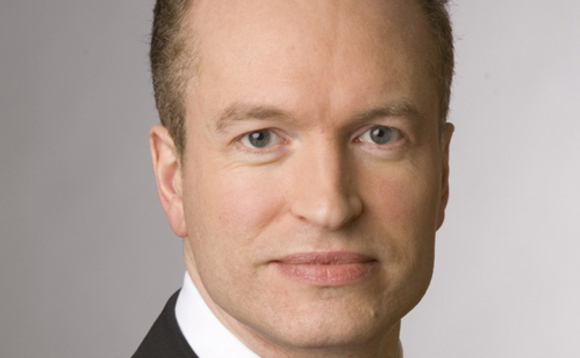
Neil Harper, MD in Morgan Stanley Alternative Investment Partners' fund-of-funds division, talks to Anneken Tappe about fund selection, capital allocation and the European economy.
Anneken Tappe: The economy is not doing great and people say more funds-of-funds are disappearing. How would you say your strategy has changed over the last five years? Are you paying more attention to special situations or distressed debt funds than you have in the past?
Neil Harper: Since our inception at Morgan Stanley in 1999, we have always focused on what we consider to be less efficient segments of the market; in the buyout space we concentrate on small-cap generalists and mid-cap specialists. In 2005, 2006 and 2007, a lot of money was raised for larger-cap buyout funds, a space which we continue to view as well capitalised.
Around 30-35% of our allocation is dedicated to special situations and distressed debt. This accentuates the point that we are always searching for inefficiency in the market, a mismatch between capital supply and demand, so to speak. At the moment there is remarkably little creativity in the private equity markets, but several areas within special situations represent exceptions. That is why those are interesting for us.
As for the disappearance of private equity funds-of-funds, it is true that some weaker performers increasingly struggle to raise capital. But capital does not run off quickly for them either, so they do not just go out of business from one day to the other. But with increasing transparency for investors, we are likely to see a rather Darwinian singling out of well-performing funds.
AT: Another thing that seems very popular in fundraising right now is co-investments. Some say it is just a sweetener for investors and actually requires a lot of extra work; others say it is a meaningful way for them to get involved with a well-performing portfolio company. What do you think?
NH: Both of these points are true. The success of co-investments really depends on the team. Often there is a lack of resources and skills. Co-investments were very popular in 2006 and 2007, when syndicated large-cap buyouts were on a high. For someone with a good and appropriately experienced team, co-investments can work out very well. But there is need for caution.
There are always two parts to a deal, due diligence on the deal and its merits, and also assessing the match between GP capabilities and target company. It is crucial to understand what specific private equity houses, even specific partners, are good at. There is a need for depth of knowledge paired with a broad skillset, which is not easy to find. Morgan Stanley AIP's PE fund-of-funds business designates about 25% of its allocation to co-investments.
AT: In terms of how you choose funds, has the current economy shifted the focus from absolute return targets to comparative performance between funds?
NH: The reality of investing is that investors will always chase absolute returns, although private equity is ultimately equity exposure and should be assessed versus returns on public equities. But in private equity, returns, whether absolute or comparative are not always a good indicator for the future. We like to take a half-quantitative, half-qualitative approach. That way, in addition to returns per se, we ask exactly how that value was created and whether such levers are appropriate going forward, while also examining the capabilities and mindsets of the partners involved.
In the period from 2005 to 2007, when a lot of money was raised, investors took performance during the time from 2000 to 2005 as an indication of the future. That is a dangerous approach in any investment class and was particularly dangerous in that time period as people raised ever larger funds with an ever broader focus. It also explains why fundraising is difficult right now; private equity is very cyclical. However, it is different for smaller investors. They can be more opportunistic.
AT: What is your opinion of placing capital in the Nordic region, which is currently being hyped as a safe haven?
NH: The Nordics offer a strong macroeconomic environment with experienced management teams and GPs, together with a very robust legal and banking system. It is relatively easy to make the case for investing in that region.
At the same time, all segments can lose attractiveness if everybody targets them – they can rapidly become overcapitalised. We focus on smaller-cap buyouts in the region where, in general, the balance between capital supply and demand is more reasonable and entrepreneurial activity remains reasonably robust.
AT: Many say that private equity funds outperform their public market equivalent (PME); would you agree that is only the case when the investments in question are in the top quartile?
NH: Generally yes, that is the case for the top-quartile, although in some time periods out-performance can go beyond that group. In our programmes we aim for a minimum of 6% above PME, a return that we believe will both more than compensate for the illiquidity in private equity and ensure that we are continuously in the top quartile.
Latest News
Stonehage Fleming raises USD 130m for largest fund to date, eyes 2024 programme
Sponsor acquired the public software group in July 2017 via the same-year vintage Partners Group Global Value 2017
Stonehage Fleming raises USD 130m for largest fund to date, eyes 2024 programme
Czech Republic-headquartered family office is targeting DACH and CEE region deals
Stonehage Fleming raises USD 130m for largest fund to date, eyes 2024 programme
Ex-Rocket Internet leader Bettina Curtze joins Swiss VC firm as partner and CFO
Stonehage Fleming raises USD 130m for largest fund to date, eyes 2024 programme
Estonia-registered VC could bolster LP base with fresh capital from funds-of-funds or pension funds