

Q&A: Jeremy Golding talks investment strategies
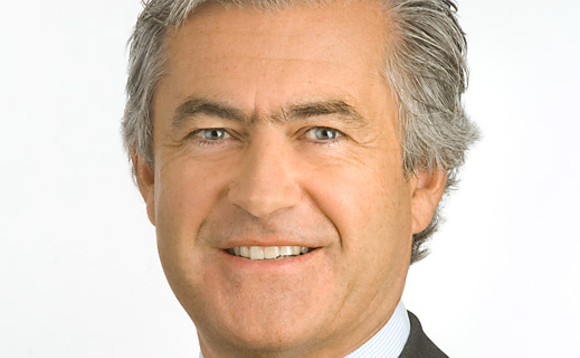
Emanuel Eftimiu speaks to Golding Capital Partnersт Jeremy Golding about his allocation strategy, expectations for the asset class and what to avoid when fundraising.
1. How has your private equity allocation changed since the credit crisis in terms of geographical and stage focus?
Over the last three years we have increased our investment focus towards European small- and mid-cap buyout funds. We have not turned away from large-caps completely, but as leverage-financing stays difficult the opportunities are limited. We prefer smaller funds with proven capabilities for operational value-creation and less dependence on financial engineering.
Our geographic focus is still on Europe as we do not see any extra returns as reward for the additional currency risk in US investments. Going forward, Asia will become more important and we continue to look at attractive secondary opportunities.
2. Are you now more likely to consider emerging investment models such as turnaround, renewables and infrastructure?
Due to the increasing concern among our institutional investors about risk and inflation we have already placed a stronger focus on infrastructure. Investments in transport, energy and utility projects offer highly stable and predictable cash flows, irrespective of short-term turmoils in financial markets. The market for infrastructure funds has matured in recent years, so that we now regard infrastructure as a standalone asset class alongside buyout. In the private debt space, we consider credit opportunity funds an attractive investment in the current economic cycle.
3. How much do you anticipate scaling back the number of your GP relationships and your total private equity allocation?
Our asset management focus continues to be exclusively on private equity, primarily because we are still fully convinced of the merits of the asset class. In fact, our studies have shown that the outperformance of private equity against a comparable stock market investment in the past was even higher during recessionary times. Indeed, we are working together with several larger investors who are about to further increase their private equity allocation. However, we also see many investors unsettled by regulatory requirements, such as Solvency II, which causes them to delay decisions about new investments.
4. What do you wish GPs would do less of when fundraising?
First and foremost, what we expect from GPs who approach us is honesty and straight talk. Unfortunately, we have seen a lot of sugar-coating and post justification of regrettable deals. We absolutely understand that there is usually no perfect track record without any mishaps, but we just wish the GPs would openly address their mistakes and - even more importantly - what they learned from them. When we invest with a GP we always strive for a long-term relationship, ideally over more than one fund generation. If we feel deceived at some point, it is very hard to restore confidence.
More on DACH

Dataciders sponsor Auctus mulls sale via Houlihan Lokey
German GP first acquired the local IT services group in May 2019 via Auctus V, a 2019-vintage
Bregal eyes local deal origination with new Swiss office
GP's third fund is completing its investment period, with fourth fund registered
Newly launched Utopia Capital aims to deploy EUR 10m-plus by 2028
Angel investor Christian Schroeder's new investment vehicle will support early-stage tech companies addressing humanitarian issues
Germany's DFL to collect NBOs for EUR 3bn media rights stake
Large-cap sponsors including Advent, Blackstone, Bridgepoint, CVC, EQT and KKR expected to bid today
Latest News

Stonehage Fleming raises USD 130m for largest fund to date, eyes 2024 programme
Sponsor acquired the public software group in July 2017 via the same-year vintage Partners Group Global Value 2017
Stonehage Fleming raises USD 130m for largest fund to date, eyes 2024 programme
Czech Republic-headquartered family office is targeting DACH and CEE region deals
Stonehage Fleming raises USD 130m for largest fund to date, eyes 2024 programme
Ex-Rocket Internet leader Bettina Curtze joins Swiss VC firm as partner and CFO
Stonehage Fleming raises USD 130m for largest fund to date, eyes 2024 programme
Estonia-registered VC could bolster LP base with fresh capital from funds-of-funds or pension funds