

Q&A with Lars Hinrichs, founder of HackFwd
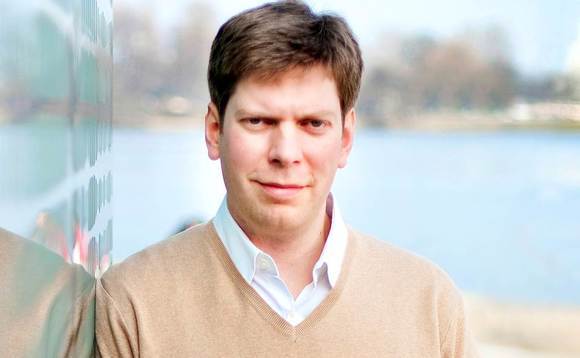
Following Lars Hinrichs’ shock announcement last week that HackFwd will no longer take on any new investments, Karin Wasteson catches up with the serial entrepreneur to discuss the start-up accelerator and his newest later-stage fund Cinco Capital.
You founded HackFwd in 2010. What was the idea behind the Hamburg-based pre-seed venture capital company and what did you hope to achieve with it?
There's an assumption that European geeks aren't as good as American geeks, and that software developers cannot develop their own game-changing companies. Back in my day when I started Xing, what I liked most was the communication with developers. But to my dissatisfaction they are not as entrepreneurial as in the US. I wanted to show that that is not the case.
HackFwd took 27% of every company it invested in, which is a pretty sizable chunk. Why did you choose to do so and was this approach working?
It depends on what you want. We are the first in, we own the rights to pre-seed investment; that way you can actually do something with the company. People who studied at business school like to think that it's expensive, but if you ask a geek – our target audience – they think it's okay; it's not cheap, it's not expensive. But if you ask the people who are in our system, they will consider it absolutely fair, even too cheap for them. Because it's more than just giving money. It's working on a product, product strategy, marketing and HR. This is where we step in as a company. The approach works if we have an exit. We haven't had an exit so far. We are planning for it; hopefully we will have an exit of more than one company soon.
What are your plans now?
I have set up Cinco Capital, which does later stage investments. In Cinco I'm a very active chairman in several companies. Right now it's more strategic work with a bunch of companies; this is something that I really enjoy.
Do you believe Europe will catch up with Silicon Valley within the near future?
I think you can't copy Silicon Valley in any way. Right now there's nothing that can stop the movement that we've seen in Silicon Valley. Even if they regulate the Visa regulations sooner or later, it is and will stay the Mecca of everything digital.
If you look at Europe in the last few years it really has caught up – considering UK companies like Wonga, or investors like Index and Atomico, the start-up movement in Berlin – there is much more entrepreneurial activity, even on a higher level in Europe. We've just invested in a company that did close to a $40m series-A round, which is unheard of in Europe and it's hard to see something similar in the US. It's very rare to see something like that.
What's the next big tech trend?
I wish I knew! Everything that can be digital will be digital. This kind of movement that covers all industries will go global, and global means that today we have only 25% of the world population online right now. There are two big growth trends at the moment; there's growth in the digital expansion (everything can be digital), and everything will be connected. So there's plenty of room for innovation.
Can you see any trends emerging in European venture?
It's like in the US, good companies will always get good funding. Companies like Index and Atomico, which I consider to be the best VCs in Europe, tend to invest more and more at a later stage. In the US there's always the series-A crunch, which might be over or not, it doesn't matter. The likelihood of worldwide success can only be achieved by maybe two or three companies per year.
When I started Xing in 2003, only a few thousand companies were starting up. Right now you have a start-up around every single corner. You have start-up clusters not just in Europe but also in South America, Asia, everywhere. So everyone is competing for those two or three companies' success each year. So the likelihood that a start-up will take off on a global level is becoming smaller and smaller everyday. It doesn't matter because there are more and more companies in the digital space that are fine with a good income. European game companies such as Supercell that came out of Helsinki is now the top grossing app for iTunes and Android. There are these kind of amazing European companies.
Can you see the series-A crunch in Europe?
This kind of crunch is everywhere. Seed and early-stage investors bring more and more money into the system. Companies are getting bigger but most of them run out of funding. There's too much supply on the start-up side, which is not bad as entrepreneurship should be promoted everywhere.
More on Venture

Redalpine expands leadership team amid CHF 1bn-plus fundraise
Ex-Rocket Internet leader Bettina Curtze joins Swiss VC firm as partner and CFO
VC Profile: RTP Global gears up to deploy largest fund to date, remains bullish on breakout opportunities
Partner Gareth Jefferies discusses early-stage deployment plans and advantages of supporting startups throughout their lifecycle

Medicxi raises USD 400m to invest in single-focus life sciences companies
GP's fourth fund will deploy USD 10m-USD 20m tickets in narrow indications of unmet need; backed by pharma
Women in PE: Earth Capital's Bezuidenhoudt and Hockley on 2024 fund launch progress and co-investment pipeline
UK-based impact investorтs female leaders discuss deployment plans and the advantages of its syndicate co-investment strategy
Latest News

Stonehage Fleming raises USD 130m for largest fund to date, eyes 2024 programme
Sponsor acquired the public software group in July 2017 via the same-year vintage Partners Group Global Value 2017
Stonehage Fleming raises USD 130m for largest fund to date, eyes 2024 programme
Czech Republic-headquartered family office is targeting DACH and CEE region deals
Stonehage Fleming raises USD 130m for largest fund to date, eyes 2024 programme
Ex-Rocket Internet leader Bettina Curtze joins Swiss VC firm as partner and CFO
Stonehage Fleming raises USD 130m for largest fund to date, eyes 2024 programme
Estonia-registered VC could bolster LP base with fresh capital from funds-of-funds or pension funds