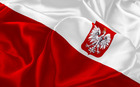

Russian IT sector aims to double VC investment

At the start of this year, the Kremlin released documents regarding an ambitious five-year plan for Russia’s IT sector, stating that it has hopes of venture capital funding in the space doubling by 2018. Ellie Pullen investigates the viability of this ambitious plan
Venture funding in Russia's IT industry currently sits at RUB 18bn ($508m), according to the Russian governement's recently published IT "road map"; the government expects to see this rise to RUB 25bn ($710.8m) by 2015 and an ambitious RUB 40bn ($1.1bn) by 2018.
"This is a very realistic scenario," says Alexey Solovyev, a managing director at tech-focused Russian venture firm Prostor Capital. "Russia's IT industry has already become the most attractive segment for venture capital firms – 70% of all investment falls on the IT industry today, and this trend is unlikely to change in the near future."
And, according to Solovyev, the recent political tensions between Russia and the Ukraine has not impacted positivity towards investing: "Regarding the recent events in the Ukraine and Crimea and the economic consequences for the Russian venture market, I don't think they will impact the investment climate in our region, at least in terms of investments in technological projects. Our fund is operating at the same pace and our strategy remains unchanged."
The increasing zeal from venture capital firms for Russia's burgeoning IT scene is not surprising. Last year saw the number of Russian internet users increase to 50% of the population, and its e-commerce industry is quickly becoming a mammoth market (hitting $12bn in 2012, equivalent to 1.9% of total retail sales in the country, and expected to grow into a $36bn market by 2015).
"Russia has the largest and fastest growing internet audience in Europe," says Solovyev. "The Russian IT industry has great potential for growth, and the main appeal is that its limits to growth are not visible yet. Currently, its share in GDP accounts for only 1.2%."
Global ambition
Solovyev says the global mind-set of Russian IT companies is much like that of Nordic companies, which are particularly attractive to venture capital firms. "Russian IT companies have big ideas about operating globally," he says. "They are inspired by the success of Luxoft, Kaspersky Lab and others."
Despite this, Solovyev does not believe the country will immediately see a significant increase in foreign firms pouring capital into the Russian tech market, but says this might change in the next three to five years. "The main reason for their reluctance is not the political risks they might face, but the reasonable unwillingness to disperse valuable resources. China, India, South America and other markets that are dominating the venture industry nowadays have not yet exhausted their potential. Currently, these markets have a significantly greater opportunity for project scaling than the Russian market."
However, Runa Capital co-founder and managing director Dmitry Chikhachev has a more optimistic outlook: "We are positive more foreign venture houses will show interest in Russian technology in the coming years," he says. "For foreign firms, it is most convenient to get access to Russia- and CIS-based tech companies through cooperation with a partner fund that has an understanding of the market. This year, we plan to launch Runa Capital Fund II with a $200m target, to focus on continuing syndicated deals with firms from the rest of Europe and the US."
While there may not yet be an abundance of foreign firms investing in the country's IT market, Russia's venture capital industry has certainly come along in leaps and bounds since its humble beginnings. Chikhachev recalls the earlier years of the Russian venture industry as an example of the recent exponential growth experienced by the country: "The number of deals in 2008 was about two dozen," he says. "In 2012, the number was nine hundred and the value of investments hit RUB 1bn.
"When we launched Runa Capital I in 2010, the number of venture funds in Russia could be counted on one hand. Now the number of investors has increased and is still growing, especially at the seed investment stage."
And the state is taking full advantage of the prospects for the industry. Among other initiatives, the establishment of business hub Skolkovo near Moscow was designed to encourage growth in what is currently a largely underdeveloped ecosystem of Russian technology start-ups.
"Skolkovo plays a big part in the popularisation of IT entrepreneurship, as it helps a lot of start-ups gain mentorship and a perspective to raise funding," says Chikhachev. But whether enthusiastic support from the Kremlin will be enough to see a RUB 22bn increase in tech venture funding by 2018 remains to be seen.
Latest News
Stonehage Fleming raises USD 130m for largest fund to date, eyes 2024 programme
Sponsor acquired the public software group in July 2017 via the same-year vintage Partners Group Global Value 2017
Stonehage Fleming raises USD 130m for largest fund to date, eyes 2024 programme
Czech Republic-headquartered family office is targeting DACH and CEE region deals

Stonehage Fleming raises USD 130m for largest fund to date, eyes 2024 programme
Ex-Rocket Internet leader Bettina Curtze joins Swiss VC firm as partner and CFO
Stonehage Fleming raises USD 130m for largest fund to date, eyes 2024 programme
Estonia-registered VC could bolster LP base with fresh capital from funds-of-funds or pension funds