

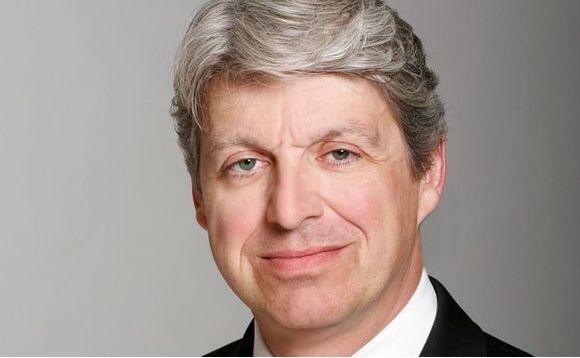
Q&A with Dr Helmut Vorndran, managing partner and co-founder of Ventizz Capital Partners
Post-Super Return, how would you describe the mood in the industry?
The phrase ‘carefully optimistic' is used frequently, although I've recently noticed a worsening of the mood. The Greece crisis, the recent deterioration of German fundamental data and the continuing debt malaise have led to a marked reluctance to invest. And for those determined to invest, deals remain difficult to complete and mostly break down because of differing valuations.
There has been a lot of positive expectations for the cleantech sector in the past. What is the picture here?
Of course, the cleantech sector suffers like all other sectors, if not to the same extent as industrial machinery or automotive. The problem here focuses on the banks. You can do ‘all equity' deals all you like, but to generate the returns investors expect, you need debt, and at the moment, there are many corporate banks that have their doors firmly closed to any kind of deal, even in cleantech and solar, where even very good businesses fall through. Wind and biomass are also affected. Banks are wary at the moment, especially of deals in an industry that is so dependant on government support.
We have recently seen an increase of project finance deals in cleantech in Europe, where investors fund the development of solar and wind farms. Are such transactions attractive for private equity investors?
With that kind of transaction, you are looking at returns of 10-12%, which is too low for private equity. In addition you can question whether private equity fund managers are the appropriate people to in vest in relatively low-maintenance solar or wind farms. We have seen transactions like that, but one has to wonder if those aren't more a sign of desperation rather than a new, viable model, especially for investors who have never done anything like that before. In some cases, such as Blackstone's €1bn investment in offshore wind park Windland, investors can just ride evaluations and sell their stake before the park is even fully built. The idea isn't that new: institutional investors and retail funds have both funded such investments, and evergreen funds are also active in this field, but such investors have a different strategy.
It is certainly a challenging investment climate at the moment, but where do you see opportunities?
Deals take a lot more effort and brains to get through. There are certainly opportunities in the mature solar and wind segments, with geothermals a young industry that might yield some interesting opportunities. We are still looking at vertically integrated solar players, both solar panels and solar thermals and solar suppliers in DACH, Benelux, the Nordic region and CEE. From our point of view, these companies have excellent market potential for the coming years and can benefit from growth financing by private equity.
How does dealflow compare to six months ago?
Dealflow has decreased somewhat, but overall, the quality and health of companies is better. Where we had 30% of companies in need of restructuring or distressed assets, that number has halved. Overall, we are seeing dealflow split with 50% buyout opportunities and 50% growth cases. That said, it is extremely challenging to actually see a deal through to completion at the moment, and I doubt that will change until there is a lot more generous acquisition financing available.
More on DACH

Dataciders sponsor Auctus mulls sale via Houlihan Lokey
German GP first acquired the local IT services group in May 2019 via Auctus V, a 2019-vintage
Bregal eyes local deal origination with new Swiss office
GP's third fund is completing its investment period, with fourth fund registered
Newly launched Utopia Capital aims to deploy EUR 10m-plus by 2028
Angel investor Christian Schroeder's new investment vehicle will support early-stage tech companies addressing humanitarian issues
Germany's DFL to collect NBOs for EUR 3bn media rights stake
Large-cap sponsors including Advent, Blackstone, Bridgepoint, CVC, EQT and KKR expected to bid today
Latest News

Stonehage Fleming raises USD 130m for largest fund to date, eyes 2024 programme
Sponsor acquired the public software group in July 2017 via the same-year vintage Partners Group Global Value 2017
Stonehage Fleming raises USD 130m for largest fund to date, eyes 2024 programme
Czech Republic-headquartered family office is targeting DACH and CEE region deals
Stonehage Fleming raises USD 130m for largest fund to date, eyes 2024 programme
Ex-Rocket Internet leader Bettina Curtze joins Swiss VC firm as partner and CFO
Stonehage Fleming raises USD 130m for largest fund to date, eyes 2024 programme
Estonia-registered VC could bolster LP base with fresh capital from funds-of-funds or pension funds