

Reforms fail to redress Spain's lack of domestic LPs
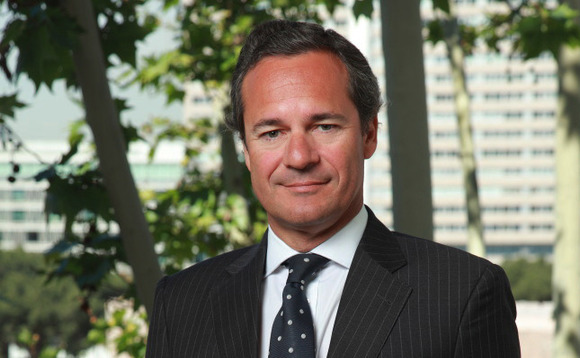
Despite several years of political reform and a strengthening economy, the Spanish private equity market is still lacking substantial support from domestic investors. Amedeo Goria reports
Ascri's latest outlook for Spanish private equity and venture capital reveals a general slowdown in 2016. "Spanish private equity and venture capital houses started with a wait-and-see approach. This was a result of the political uncertainty following the general election in December 2015," says Juan Luis Ramírez, vice-chair at Ascri. "Despite all the reforms approved by the government in the past few years, the country still suffers a lack of institutional investors that could bolster its buyout activity. Fundraising is the most affected by the current situation."
With local private equity players struggling to raise capital from domestic LPs, the number of foreign funds investing in the Spanish market has increased consistently, according to Ascri. Foreign funds invested the largest amount of capital in Spain last year, amounting to €1.72bn, which represents 60% of the total deal value in the country.
At the same time, the figures released by Ascri reveal that 76% of all deals were valued below €1m, which highlights the importance of venture capital and early-stage deals, meaning that later-stage deals, which tend to demand larger equity tickets, accounted for just 24% of activity.
This coincides with Spanish venture capital firms investing €611.7m in 2015, marking a 79% increase compared to 2014. According to unquote" data, venture capital activity represented 70.9% of the total 116 transactions in the Spanish market in 2015, while private equity accounted for 29.1%.
According to Ramírez, there is a clearer divide between local venture and private equity players, with the Spanish venture market dominated by well-established local players. "Although," he concedes, "the number of foreign venture capital firms active in the country also increased in the past year."
Fundraising woes
In order to boost buyout activity, Ramírez believes Spain should increase the number of domestic LPs by reforming the national pension scheme, which, he says, discourages the creation of private pension funds.
Furthermore, he feels there is a need to clarify the regulatory environment, which prevents pension funds and insurance companies from investing in private equity. "There are still some regulatory issues that need to be approved to bring the Spanish insurance companies and pension funds closer to private equity. The investors seem to need a clearer regulatory environment," says Ramirez.
The lack of Spanish investors has to be addressed. On top of this, Spain needs a broader awareness of the importance of the private equity industry to gain the trust of Spanish institutional investors" – Juan Luis Ramírez, Ascri
"The lack of Spanish investors has to be addressed. On top of this, Spain needs a broader awareness of the importance of the private equity industry to gain the trust of Spanish institutional investors. All the industry actors, including Ascri, have to highlight to Spanish LPs the opportunities of the market."
According to Ramírez, one of the most significant measures undertaken by the Spanish government to address the problem was the launch of fund-of-funds Fond-ICO, in May 2013. It was initially provided with €1.2bn, with the government subsequently increasing its commitments to €1.5bn in November 2015.
"Fond-ICO was a great help for the Spanish market" says Ramírez. "Since it launched, the fund-of-funds invested in Spanish funds in private equity, debt funds and venture capital." And its activity has been reflected in the Spanish fundraising market, which reached €1.5bn in new funds in 2015.
According to Ramírez, political uncertainty in Spain could be resolved by September 2016 and, thanks to renewed stability, the Spanish market will likely be awash with opportunities for private equity and venture capital investors. "Spain sees more than 60% of its GDP concentrated in small and medium-sized enterprises. Most of the companies have fewer than 50 employees and this makes it difficult for them to compete in the global market. This is a big opportunity for private equity in Spain because there are many investment opportunities and great chances to allocate money to work on making those companies bigger, more efficient and competitive," says Ramírez.
Looking at unquote" data, Spain's buyout activity has cooled since November 2015 before the general election. At that point, overall deal value was €1.2bn, with 13 transactions in November. The following month, value dipped to €334m with a total of six deals, while January saw €122.5m of deal value and four deals completed. By February, deal value was €233m, with a total of four transactions.
Latest News
Stonehage Fleming raises USD 130m for largest fund to date, eyes 2024 programme
Sponsor acquired the public software group in July 2017 via the same-year vintage Partners Group Global Value 2017

Stonehage Fleming raises USD 130m for largest fund to date, eyes 2024 programme
Czech Republic-headquartered family office is targeting DACH and CEE region deals

Stonehage Fleming raises USD 130m for largest fund to date, eyes 2024 programme
Ex-Rocket Internet leader Bettina Curtze joins Swiss VC firm as partner and CFO

Stonehage Fleming raises USD 130m for largest fund to date, eyes 2024 programme
Estonia-registered VC could bolster LP base with fresh capital from funds-of-funds or pension funds