

Q&A: ACE & Company's Adam Said
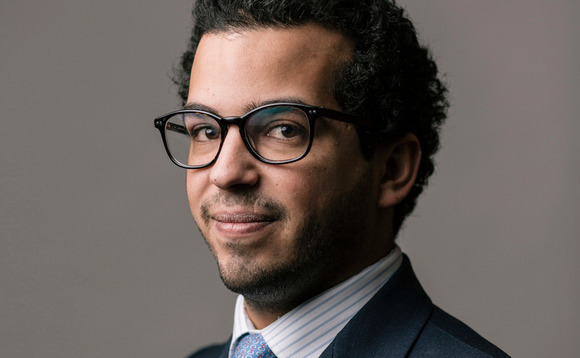
Adam Said, founder of co-investment-focused private equity firm ACE & Company, speaks to Katharina Semke about the Swiss investment landscape and the advantages of using a wide scope of strategies
Katharina Semke: Why did you choose to establish ACE & Company's headquarters in Switzerland?
Adam Said: Switzerland has a market that offers quite a lot of strength, with its position as a financial hub and its knowledge of private investors. It also has a very strong entrepreneurial base and many research labs. So we felt that the ecosystem for private equity was ripe; it was kind of an untapped market.
KS: How has the Swiss investment landscape developed in recent years?
AS: It has moved in a positive direction. There are more and more actors, banks as well as private investors. Research labs and universities are starting to make private equity a focus of their business. I think that it took a bit longer than in other markets to see that, but now it's really developing.
KS: Why do you think that it took longer for Switzerland to embrace private equity investments?
AS: The framework of regulation was caught up with a lot of other matters, including the banking secrecy and regulation of banks. Historically, private equity in Switzerland did exist, it is very institutional. It was run out of Zurich typically for large pensions or large groups. ACE, however, is positioned on the private investor front of private equity.
The regulators were typically used to independent asset managers that run liquid assets. However, FINMA [the Swiss Financial Market Supervisory Authority] has thought of the next stages and about which structures would allow a better development of this ecosystem.
KS: Which sectors are especially interesting in Switzerland?
AS: Food and beverage is of great interest to us. We launched a new strategy, ACE Swiss Food and Beverage. The reason for that is the structural shift in the market with a strong Swiss franc and the currency fluctuation that we have seen this year. This has challenged a lot of groups that were historically passive to rethink their supply chain and the cost structure, and to be more efficient.
KS: Which strategy is for you the most important in the country? Venture capital or private equity?
AS: In Switzerland, the growth side with food and beverage is what we are focused on. We are also active on the venture side. Switzerland is a fintech hub, and it can differentiate itself in the financial services sector. The country has also positioned itself as one of the hubs for biotech and healthcare technology. For that sector, it is probably the second most important centre after Boston. Very interesting in my opinion is Switzerland's ability to tap into the cyber security and privacy segment. I think that this is going to be a growing part of the ecosystem.
KS: ACE is very specialised, but wide in terms of strategies. What is the reason for that?
AS: We are wide in scope but narrow in execution. By doing angel, venture, growth, buyout and secondaries deals, we are able to see pockets of opportunities that are more attractive than others. We decided against going into a specialised niche upfront because we think that the niches of opportunities shift with sector and country trends and the market environment. If we were too specialised, we would be subject to cycles of different sectors and economies.
KS: You recently announced a collaboration with the private bank Syz. How will the cooperation work?
AS: We will be in charge of sourcing, due diligence and execution, as we are for all our investors. Our investment committee at ACE decides on every investment before it is executed. This will remain. At the point when investments are decided upon, we would share all the information with the bank, which has set up an independent investment committee. It needs to approve for that transaction to be offered to their clients.
There are different hurdles, a bank needs to take into account the contract they have with each client, they have to track everything that they offer and make sure that it fits in with their client's interests. So they will run their own investment committee, decide if the deals fit their clients' needs, and then propose the deals to them.
KS: Has Syz been an LP for one of your funds?
AS: Not the bank directly, but some of their clients. Syz will now become an LP in ACE. We have learned a lot on the regulatory front on the best practices and they have been exposed to a more innovative and interesting investment offering.
KS: Will you be co-investing?
AS: Syz will be investing through us. They are using ACE as their private equity partner. A lot of private clients and banks are requesting banks for direct investment opportunities. Syz has decided rather than to do it on their own, to work with a partner like us to source, diligence and execute on these transactions.
KS: Is ACE working on a deal-by-deal basis as well as investing via funds?
AS: Rather than funds, we have a portfolio of investments, where within a specific theme, like food and beverages, a few investors have joined us in the effort to build this platform and they want exposure to everything that we do in that space. Other investors, on an ad hoc basis, will say 'I only want exposure to a specific transaction', because they might have knowledge of it or have experience in that space.
KS: But you call yourself a private equity firm.
AS: ACE is a global private equity firm and we have investment vehicles, but they are very thematic and they are very narrow and specific. So we have a Swiss F&B vehicle, an early-stage angel vehicle and a very narrow late-stage vehicle.
KS: You are working with Middle Eastern investors. Do they have a growing appetite for European private equity?
AS: Middle Eastern investors are looking to diversify their asset base in general. This is not particularly new, but might be increasing in pace because of turmoil in the region. It's happening in Europe, but they are also looking in the US.
KS: Are they looking into specific strategies?
AS: It's more diverse. In my opinion, local entrepreneurs and businessmen should diversify their corporate entities into international ones. A lot of local businesses are very strong and had great markets for many years. Now they should and will be looking for opportunities not to just move cash away and do investments abroad, but to really diversify their income base and operating businesses into new markets. Those who do that successfully will do very well.
KS: What type of players from the Middle East are investing?
AS: Sovereign wealth funds are looking to invest abroad. That probably has slowed down in recent months, simply because they are also looking at how to support the local markets. Family offices have been very active and I would say corporations should be more active, not solely for investment purposes.
More on DACH

Dataciders sponsor Auctus mulls sale via Houlihan Lokey
German GP first acquired the local IT services group in May 2019 via Auctus V, a 2019-vintage

Bregal eyes local deal origination with new Swiss office
GP's third fund is completing its investment period, with fourth fund registered

Newly launched Utopia Capital aims to deploy EUR 10m-plus by 2028
Angel investor Christian Schroeder's new investment vehicle will support early-stage tech companies addressing humanitarian issues

Germany's DFL to collect NBOs for EUR 3bn media rights stake
Large-cap sponsors including Advent, Blackstone, Bridgepoint, CVC, EQT and KKR expected to bid today
Latest News

Stonehage Fleming raises USD 130m for largest fund to date, eyes 2024 programme
Sponsor acquired the public software group in July 2017 via the same-year vintage Partners Group Global Value 2017
Stonehage Fleming raises USD 130m for largest fund to date, eyes 2024 programme
Czech Republic-headquartered family office is targeting DACH and CEE region deals
Stonehage Fleming raises USD 130m for largest fund to date, eyes 2024 programme
Ex-Rocket Internet leader Bettina Curtze joins Swiss VC firm as partner and CFO
Stonehage Fleming raises USD 130m for largest fund to date, eyes 2024 programme
Estonia-registered VC could bolster LP base with fresh capital from funds-of-funds or pension funds